
Showing posts with label inquiry learning. Show all posts
Showing posts with label inquiry learning. Show all posts
15 July 2015
CLMOOC Unmake: Unintroducing inquiry learning
Symphony of Ideas has moved! Follow the link to read the post CLMOOC Unmake: Unintroducing inquiry learning at its new home on WordPress.

24 April 2015
Exhibition rubrics & Global Issues Expo
Symphony of Ideas has moved! Follow the link to read the post Exhibition rubrics & Global Issues Expo at its new home on WordPress.
10 April 2015
Elements of the PYP Exhibition
This week, my class of fifth and sixth graders began the culmination of their IB Primary Years journey, the Exhibition. A self-directed and collaborative project, it is my favorite part of the year and a deeply enjoyable challenge to facilitate.
Before setting out, I organized a meeting with all Exhibition stakeholders including students, parents, teachers, and administrators. We discussed everyone's ideas, questions, and concerns in order to draft our Essential Agreements.
The Exhibition Guidelines provide clear expectations, which I have synthesized for the students to provide support for their projects. One helpful practice I have chosen is to clarify five required components of the project. Specifically, every student must choose a global issue, deliver a persuasive speech, write an expository essay, create a work of art, and engage in community action. Among our first activities was introducing the organizer below.
.jpg)
Before setting out, I organized a meeting with all Exhibition stakeholders including students, parents, teachers, and administrators. We discussed everyone's ideas, questions, and concerns in order to draft our Essential Agreements.
Components
The Exhibition Guidelines provide clear expectations, which I have synthesized for the students to provide support for their projects. One helpful practice I have chosen is to clarify five required components of the project. Specifically, every student must choose a global issue, deliver a persuasive speech, write an expository essay, create a work of art, and engage in community action. Among our first activities was introducing the organizer below.
In this way, each student has a clear map of expectations, yet is empowered to pursue their project along their own path.
25 March 2015
Composite skills in the PYP
Preparing students for the Primary Years Program Exhibition, a self directed and collaborative culminating project, has been a rewarding challenge this year. In a sense, I've been thinking of the entire school as a long term project with the Exhibition being the 'deliverable' product.
The process of developing capacities and competencies in my students has led to analysis and evaluation of Transdisciplinary Skills in the PYP.
I like the list of skills and the categories into which they are organized (thinking, social, research, self management, communication), and I have been developing a model for composite skills. These are skills that require fluency in other fundamental skills and attitudes.
[This post was initially titled Hybrid skills in the PYP. After further consideration, I realized that 'composite' was a better description than 'hybrid'. Hybrid connotes that only parts of the fundamental skills are utilized, while 'composite' connotes that each skill is integrated in its entirety. I took the liberty of substituting the terms throughout the post.]
The first composite skill I conceived at the end of the last school year was Conversation. My reasoning was that conversation requires a combination of the Listening and Speaking communication skills together with the attitude of Empathy.
During the year, I have introduced a few other composite skills to our classroom toolbox, and am now in the process of organizing and codifying them in the MindMup below. If you would like to collaborate, the Composite skills mind map is shared via Google Drive. Use MindMup to open it and get started.

The process of developing capacities and competencies in my students has led to analysis and evaluation of Transdisciplinary Skills in the PYP.
I like the list of skills and the categories into which they are organized (thinking, social, research, self management, communication), and I have been developing a model for composite skills. These are skills that require fluency in other fundamental skills and attitudes.
[This post was initially titled Hybrid skills in the PYP. After further consideration, I realized that 'composite' was a better description than 'hybrid'. Hybrid connotes that only parts of the fundamental skills are utilized, while 'composite' connotes that each skill is integrated in its entirety. I took the liberty of substituting the terms throughout the post.]
The first composite skill I conceived at the end of the last school year was Conversation. My reasoning was that conversation requires a combination of the Listening and Speaking communication skills together with the attitude of Empathy.
During the year, I have introduced a few other composite skills to our classroom toolbox, and am now in the process of organizing and codifying them in the MindMup below. If you would like to collaborate, the Composite skills mind map is shared via Google Drive. Use MindMup to open it and get started.
17 February 2015
What is technology?
On Monday morning, I embarked upon a unit of inquiry with my grade 5/6 class by using our usual 'warm up' routine to reflect on and discuss the slide below.

As students arrive in the morning, when possible, I project some sort of provocation, sometimes directly connected to our inquiries, sometimes specifically not, and sometimes just for fun (link to 'warm up' slides).
Many students sit down and begin writing or sketching immediately, while some prefer to converse before working independently. After a few minutes, we share and discuss our ideas.
Many students sit down and begin writing or sketching immediately, while some prefer to converse before working independently. After a few minutes, we share and discuss our ideas.
This 'technology' provocation was effective and I was pleasantly surprised by students' insights. Their responses included definitions with words like 'tools'. 'useful', and 'solve problems'. Some also alluded to negative as well as positive effects of technology. At the conclusion of our brief discussion, I introduced our central idea for the unit: Scientific understanding constantly evolves to build and destroy. (link to unit planner)
Before setting the students loose, we will conduct a modeled inquiry into 3D printing. The purpose will be to model a standard inquiry process as well as generate interest in various aspects of technology including scientific, social, artistic, and cultural. It was extremely effective last year and, especially based on my current class' formative understandings, I'm confident that the next few weeks will be fun and enlightening.
Before setting the students loose, we will conduct a modeled inquiry into 3D printing. The purpose will be to model a standard inquiry process as well as generate interest in various aspects of technology including scientific, social, artistic, and cultural. It was extremely effective last year and, especially based on my current class' formative understandings, I'm confident that the next few weeks will be fun and enlightening.
15 October 2014
Inquiry with Evernote vol 3 | Introducing the Inquiry Learning Resources Project
In the summer of 2013, I started using Evernote to collect and curate resources for planning and pursuing inquiry learning, as I blogged in the posts, Inquiry with Evernote vol 1 and Inquiry with Evernote vol 2 . Since then, my collection of notes has expanded. More importantly, the channels from which I collect these images, videos, and articles have become much more diverse and poignant. Most importantly, I am slowly refining my tagging strategies to make the collection more conceptually connected and social and environmental action oriented.
Now, I would like to introduce the Inquiry Learning Resources Project. The effort to build a digital notebook of inquiry provoking notes continues, but I have expanded the project to social media.
Twitter
Pinterest
Facebook
Now, I would like to introduce the Inquiry Learning Resources Project. The effort to build a digital notebook of inquiry provoking notes continues, but I have expanded the project to social media.
Evernote
The project's primary home is the public notebook, Inquiry Learning Resources. Feel free to join, search, and utilize it for your classroom or personal inquiries.
Tumblr
This project was inspired by a desire to organize the fascinating content I discovered on Tumblr. Resources are shared on the Inquiry Learning Resources blog and using the tag #inquirylearning. That blog accepts submissions, so if you're on Tumblr, feel free to contribute.
I set up the account @provokinquiry to share resources on Twitter, and also using the #inquirylearning tag. Hopefully it will also be a great way to raise awareness for the project.
The public board Inquiry Learning Resources on Pinterest is also a great place to share. Please ask to join to submit pins.
Resources are also shared on an Inquiry Learning Resources Page on Facebook.
The future
My immediate goal is to get in the habit of updating regularly, although completing projects is always a challenge due to the crunch of the school year before January. Hopefully, more inquiry educators will want to collaborate to help expand the project further!
25 September 2014
LX Design
Two intersecting areas of study which have captivated my interest this year, Design Thinking and Project Management, have significant promise as I consider how to apply new principles to planning a year of learning in my Grade 5/6 classroom.
The two disciplines are strongly intertwined and have profound implications when applied to designing learning experiences. This post seeks to define LX Design as an approach to classroom planning and as a framework for ongoing iteration and reflection.
For example, when designing a machine to make coffee, one must consider not only the cost and suitability of the materials used, but also the likely moods of users, often early in the morning, while using the coffee machine.
The two disciplines are strongly intertwined and have profound implications when applied to designing learning experiences. This post seeks to define LX Design as an approach to classroom planning and as a framework for ongoing iteration and reflection.
Design Thinking
Completing the Macromedia University Design Thinking MOOC introduced me to the discipline of User Experience Design, or UX Design. When thinking in terms of user experience, a designer considers all human elements and possibilities related to a product or service, not only the material and economic.
For example, when designing a machine to make coffee, one must consider not only the cost and suitability of the materials used, but also the likely moods of users, often early in the morning, while using the coffee machine.
A common theme in Design Thinking is to understand people's emotional, social, psychological, and spiritual needs when designing products, services, and experiences. In the case of education, we design learning experiences, hence the term 'LX Design'.
Klaus Krippendorff's lecture, The Key Concepts of The Semantic Turn, and in particular his explanations of 'meanings of use', challenged and transformed my thinking about learning. I recreated the graphic below to represent what I consider an essential model for educators. It is the foundation for my approach to LX Design.

Meanings of use
30 May 2014
Inquiry or research?
In the past several years, I have adopted an inquiry based approach to teaching. In connecting and conversing with colleagues, I have observed that there is as much disagreement about what inquiry based learning and teaching is as there are approaches to inquiry itself.
From my perspective, there is one driving question that can summarize inquiry based education as a whole:
How can we all become better inquirers?
If this is the basis for discourse and conversation, then the possibilities for learning are endless.
The tweet below sparked my interest to inquire into the difference between inquiry and research:
@wholeboxndice Thanks so much. I hope we can have a chat about the difference between 'inquiry' and 'research'..that's one of our AFI's...
— Katrina Viloria (@kviloria) May 15, 2014
16 May 2014
SAMR v Smart-Board
In October, the dry-erase whiteboard in my classroom was replaced with a Promethean ActivBoard. The children at school aptly described it as a 'giant iPad' as they explored the functions of dragging and dropping with their fingers and writing with the provided styluses.
It was a much anticipated change, and now that I've had opportunities to integrate it into my approaches to teaching, this is an ideal opportunity to assess how I've utilized it according to the SAMR model of technology integration.

It was a much anticipated change, and now that I've had opportunities to integrate it into my approaches to teaching, this is an ideal opportunity to assess how I've utilized it according to the SAMR model of technology integration.
04 March 2014
Infographics in the classroom
Who doesn't love a good infographic?
I get my fix from Daily Infographic, but a quick Google search uncovers many more sources.
I'm often surprised how the layout, color palette, and design of a document draw me into a topic. To capitalize on this phenomenon in the classroom, I started building an infographics section on the wall.

The concept is so simple and fun. Just print infographics, laminate them, and affix them to the wall with magnetic tape. Students are welcome to browse during independent reading and inquiry periods. Having them mounted magnetically means they are portable. Occasionally, they become very excited about a particular graphic and share with each other.
Although it has been somewhat labor intensive to build a collection, the result is an engaging range that my sixth grade students find very inviting. Changing the selection always results in some kind of excitement, and learning with them builds visual media fluency and provokes inquiries in a novel way.
With such an emphasis on digital technology, it's important to remember that people learn in many different ways. Providing a variety of approaches to learning is always the best application of educational technology.
Why not start your own infographics wall?
24 February 2014
Compare cultures through literature
 |
| Spoiler Alert! The last line is "...until the day they were crushed to death in a shower of flying stones." |
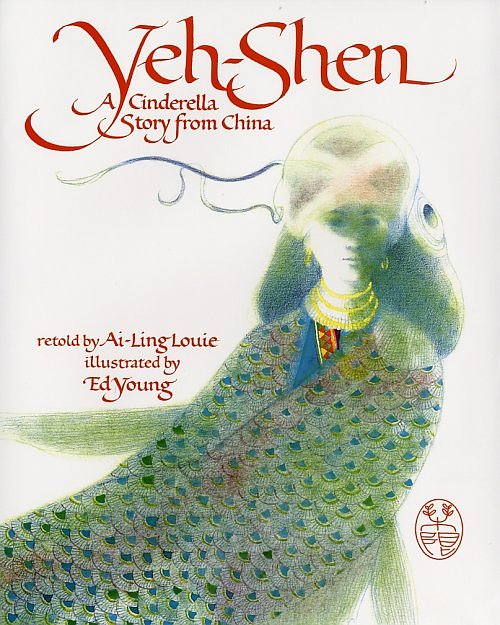
One of my favorite inquiries is to deduce and compare the values of different cultures based on their "Cinderella" stories. Probably the oldest, and my personal favorite, is Yeh-Shen from China.
17 February 2014
Gearing up for Edcamp Tokyo
In the Spring of last year, I tweeted my interest in having an Edcamp in Tokyo:
There wasn't much interest, although in retrospect I suppose it would have been helpful to use the actual #Edcamp hashtag. I set up a page on the Edcamp Wiki and laid in wait...
Several months later, a tweet piqued my interest once again:
As Greg would later observe, it snowballed from there. Several Tokyo and Yokohama teacher-leaders joined the organizational team. We set up an Edcamp Tokyo website, held a Google Hangout with Edcamp Foundation Board Member, Kristen Swanson, settled on a location, Yokohama International School, and a date, March 15.
With only four weeks to go, there are currently more than fifty dedicated educators registered and conversations percolating on our Edcamp Tokyo Connectivity page, Edcamp Tokyo Google+ Community, Edcamp Tokyo Idea Wall, and of course around the #EdcampTokyo and #Edcamp東京 hashtags on Twitter!
This is the first chance for educators in Japan to assemble for self-directed, collaborative professional development. Even those outside of Japan might be interested in our activities, especially as they pertain to inquiry-learning, multilingual and third-culture education, technology, and whatever inspiration may strike!
I can't wait to see you there, in person or virtually.
Edcamp Tokyo
I wonder who might be interested in Edcamp Tokyo!?! #Edchat #pypchat #intedchat #japan
— Bart Miller (@BarMill) May 28, 2013
Crickets...
Several months later, a tweet piqued my interest once again:
@DBullio we need a #edcamp tokyo...
— Greg F (@g33f33) October 17, 2013
As Greg would later observe, it snowballed from there. Several Tokyo and Yokohama teacher-leaders joined the organizational team. We set up an Edcamp Tokyo website, held a Google Hangout with Edcamp Foundation Board Member, Kristen Swanson, settled on a location, Yokohama International School, and a date, March 15.
Countdown to Edcamp Tokyo
This is the first chance for educators in Japan to assemble for self-directed, collaborative professional development. Even those outside of Japan might be interested in our activities, especially as they pertain to inquiry-learning, multilingual and third-culture education, technology, and whatever inspiration may strike!
I can't wait to see you there, in person or virtually.
Edcamp Tokyo
02 February 2014
Deeper Learning Student Work
Looking at student work
I'd like to share three pieces of student work, each of which shows unique applications of deeper learning.
Landforms
The first is a Grade 2 'landforms' project. The task was to build and paint an island with landforms. The example shows a few examples of deeper geographical understanding, especially that the river is carved into the land, rather than simply painted on, and that it flows from the hills to the ocean.
However, it would have been better to provide greater opportunities to practice with the clay and paint in a creative way. The student's reflection, 'I could to better', is very revealing of the fact that this little project utilized too many different, new skills. I should have planned a stand-alone art unit using these tools before applying them in this Geography activity.

30 January 2014
Teacher as Learning Documentarian
Looking at student work
I teach in an inquiry learning elementary school (PYP), an environment which facilitates and empowers deeper learning very effectively. As I have explored inquiry in the classroom, I have noticed that I do far less teaching and far more documentation.
Students engaged in authentic learning shouldn't be bothered by standards or specific learning outcomes, yet they constantly accomplish them. As a teacher, I see myself more as a learning documentarian seeking out evidence of their learning as they inquire into their interests and curiosities.
Google Doc experiment
How it works
Our learning continua are organized by phases, so I color coded each. When a student demonstrates a particular learning outcome, I indicate the date and hyperlink it to a digital version of the artifact. Examples so far have included scanned writing assessments, photographs, Evernote entries, videos, and blog posts. When an artifact is recorded, the shade of the box for that learning outcome is made lighter. A white box indicates a mastered learning outcome.
The example I provided in this post is for a sixth grader, so I took it for granted that the first three phases were mastered. Please have a look at phases four and five and follow the links to get a sense of how this type of document can work. If it were used from a young age and accompanied the student through elementary school, it would serve as an authentic representation of their learning.
This is still an experiment, and your comments and suggestions are highly welcomed. I would certainly appreciate collaborators on this project to develop an efficient system to document deeper learning!
18 December 2013
PYP Exhibition Theme Synthesis
In the New Year, my sixth grade class will undertake our school's inaugural PYP Exhibition. Here's the description of the event from the International Baccalaureate Organization website:
"Students who are in their final year of the programme are expected to carry out an extended, collaborative inquiry project, known as the exhibition, under the guidance of their teachers.
The exhibition represents a significant event in the life of both the school and student, synthesizing the essential elements of the programme and sharing them with the whole school community. It is an opportunity for students to exhibit the attributes of the Learner profile that have been developing throughout their engagement with the programme. It is a culminating experience marking the transition from PYP to further steps in education.
Schools are given considerable flexibility in their choice of real-life issues or problems to be explored or investigated in the exhibition."
In the past years, I have visited several Exhibitions in Tokyo and explored the online presentations of dozens more. There are as many unique approaches as there are people participating! Designing an environment in which the exhibitioners will thrive is a grand and fascinating challenge and an ideal example of metateaching.
One aspect all examples I have viewed share in common is that they fall under one of the IB PYP Transdisciplinary Themes. However, in the Exhibition Guidelines, it states that one of the essential features should be to "synthesize aspects of all six transdisciplinary themes".
 |
| "synthesize aspects of all six transdisciplinary themes" |
I thought of one way to attempt this by way of inspiration from refrigerator poetry magnets. I simply printed the key terms from the six transdisciplinary themes, laminated and cut them out, attached magnets and arrayed them on a corner of our whiteboard. My class and I had a brief discussion of the themes and the goal to draw items from them of interest to us and rearrange them to create our own theme description. From that, we can create a title for our theme which can serve as a title for our Exhibition.
They began by playing, which is exactly what I had hoped for. The point is to play with the words to begin to explore our ideas. As our ideas become more organized, so should the words. I am extremely excited to begin our Exhibition inquiries, and have been planning activities all year as practice and preparation. I view it as an archetypal Independent Inquiry, and the first formal test of many of the principles of inquiry we have been exploring.
02 October 2013
Silent Discussion
Classroom discussion is a valuable opportunity to share ideas and develop communication skills, but often, the full benefits are enjoyed by the most extroverted and precocious students in the class. While I do believe that everyone should develop skills in all areas, especially those that are not as strong, I also believe that teachers, or better yet, metateachers, should design learning activities that provide equitable opportunities for learners with different strengths. The 'Silent Discussion' is just such an activity.
Simply explained, it's a way for a group to hold a discussion without speaking. I tried it recently and the results were fantastic, so I thought I'd share.
In our current unit of inquiry into Rights & Responsibilities, there are three lines of inquiry we have been following:
How rights are viewed globally
How rights are granted
Actions required to protect rights
Everyone knew that the lines of inquiry would guide our learning for the next few weeks, and the unit had been provoked by a guided inquiry into the Bayaka people of Central Africa. The Silent Discussion was intended to develop our understanding of the concept of Rights and focus our attention in a socially creative manner.
Organizing the Silent Discussion
1 Print the lines of inquiry, one each, on large paper (we used A3).
2 Place the papers at different corners of the room, or around a central table (consider elbow room).
3 Everyone browses silently with their favorite writing implement, writing comments and questions about the lines of inquiry.
4 Read others' comments and questions, reply, continue.

The activity started slowly, and grew in energy during a fifteen minute session. I injected some provocations and modeled different ways to engage with the activity (drawing pictures, circling and connecting different comments/questions). Finally, we posted the sheets and reflected on our thoughts and interactions.
I believe that the activity works best if it begins with abstract concepts or statements, rather than topics. It was also helpful to play thoughtful music (I generally stream KUSC).
It occurred to me that a techologized version of the Silent Discussion could be possible, but I rather like the museum-like energy generated by thoughtful browsing and the visceral nature of physically constructing our collective understandings on paper.
Another detail that would have extended the activity would be to post provocative images around the room, and perhaps provide videos or news articles to further contextualize the lines of inquiry.
Have you learned or taught through an activity like the Silent Discussion?
Simply explained, it's a way for a group to hold a discussion without speaking. I tried it recently and the results were fantastic, so I thought I'd share.
In our current unit of inquiry into Rights & Responsibilities, there are three lines of inquiry we have been following:
How rights are viewed globally
How rights are granted
Actions required to protect rights
Everyone knew that the lines of inquiry would guide our learning for the next few weeks, and the unit had been provoked by a guided inquiry into the Bayaka people of Central Africa. The Silent Discussion was intended to develop our understanding of the concept of Rights and focus our attention in a socially creative manner.
Organizing the Silent Discussion
1 Print the lines of inquiry, one each, on large paper (we used A3).
2 Place the papers at different corners of the room, or around a central table (consider elbow room).
3 Everyone browses silently with their favorite writing implement, writing comments and questions about the lines of inquiry.
4 Read others' comments and questions, reply, continue.

The activity started slowly, and grew in energy during a fifteen minute session. I injected some provocations and modeled different ways to engage with the activity (drawing pictures, circling and connecting different comments/questions). Finally, we posted the sheets and reflected on our thoughts and interactions.
I believe that the activity works best if it begins with abstract concepts or statements, rather than topics. It was also helpful to play thoughtful music (I generally stream KUSC).
It occurred to me that a techologized version of the Silent Discussion could be possible, but I rather like the museum-like energy generated by thoughtful browsing and the visceral nature of physically constructing our collective understandings on paper.
Another detail that would have extended the activity would be to post provocative images around the room, and perhaps provide videos or news articles to further contextualize the lines of inquiry.
Have you learned or taught through an activity like the Silent Discussion?
05 September 2013
Musical Keyboard Inquiry
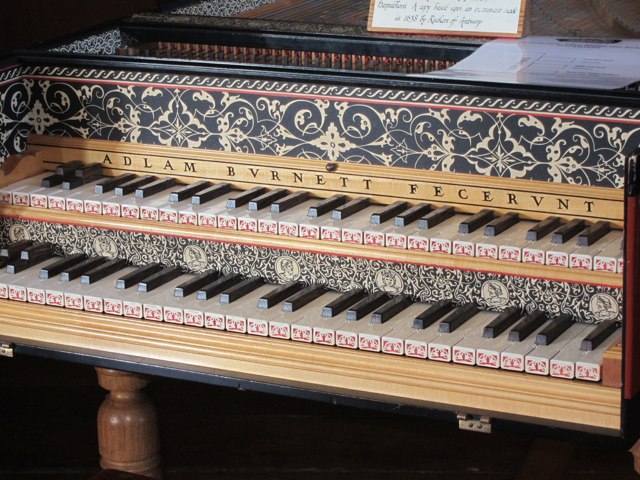
In addition to being a PYP Grade 6 teacher, I also teach music to Grades 4-6, in addition to my own homeroom. Last year, I taught music to Grades 1-6, but as the school is grows, the schedule gets a bit tighter.
The fourth graders are just beginning their musical keyboard study, so I thought we could set the stage with a listening-based inquiry.
In the activity, we listened to recordings of various keyboard instruments from hurdy-gurdy to minimoog for which I had gathered YouTube links. After each listen, students responded to the question:
01 September 2013
Five innovations for the first day of school
Although I was at school last week, tomorrow is the first day for students and I'm very excited. I've changed a few of my approaches to teaching and can't to get started. I think other teachers may be interested, so I'll outline a few of this year's innovations:
1 Organizing resources with Evernote. As I've been reporting in my 'Inquiry with Evernote' posts at Inquire Within, I have a few hundred photos, articles, videos, websites, etc tagged according to theme, concepts, and disciplines. The result is a cache of resources that can be called upon in various ways and is meant to provide provocation and support for inquiry-based learning and teaching.
2 Using the class blog as a learning hub. This year, our blog will be central to learning, connecting, and collaborating. With that in mind, I've already prepared posts in draft form ready to be published when the time comes. For example, in our first unit, we'll view two videos and read a magazine article. We'll discuss them in class, but respond on the class blog. I've embedded the videos and link to the article in posts so that they can be reviewed before students respond by writing comments.
We'll be inviting other classes inquiring into similar themes or topics to respond, as well, by searching their blogs for related posts on which to comment and using twitter to raise awareness.
1 Organizing resources with Evernote. As I've been reporting in my 'Inquiry with Evernote' posts at Inquire Within, I have a few hundred photos, articles, videos, websites, etc tagged according to theme, concepts, and disciplines. The result is a cache of resources that can be called upon in various ways and is meant to provide provocation and support for inquiry-based learning and teaching.
2 Using the class blog as a learning hub. This year, our blog will be central to learning, connecting, and collaborating. With that in mind, I've already prepared posts in draft form ready to be published when the time comes. For example, in our first unit, we'll view two videos and read a magazine article. We'll discuss them in class, but respond on the class blog. I've embedded the videos and link to the article in posts so that they can be reviewed before students respond by writing comments.
We'll be inviting other classes inquiring into similar themes or topics to respond, as well, by searching their blogs for related posts on which to comment and using twitter to raise awareness.
18 August 2013
Inquiry with Evernote vol 2
After spending the summer curating and tagging a veritable plethora of resources for inquiry (300+ notes) and with the first day of a new school year rapidly approaching, it's time to use Evernote to plan a unit of inquiry for my grade 6 class. The inquiry was framed at the end of the last school year using the IB PYP planner:
Transdisciplinary Theme: Who we are
Central Idea: Human rights and responsibilities are shared across cultures.
Key Concepts: Function, Connection, Responsibility
Lines of Inquiry: How rights are viewed globally; How rights are granted; Actions required to protect rights
Naturally, I have a few resources and activities in mind already, such as introducing the Universal Declaration of Human Rights, surveying other classes around the world about their views regarding human rights, and researching the history of rights movements and laws, among others.
What I'm looking for from my Evernote notebook, however, is the shocking, thrilling, engaging, provoking media that truly engage authentic inquiry and learning.
The obvious thing to do first is to find out if the tagging scheme outlined in Inquiry with Evernote vol 1 really works to retrieve relevant and provocative resources. Starting with the 'Who we are' tag, my first search yielded 95 results. Refining that search by the 'Function' tag revealed 26 notes, 'Connection' had 23, and 'Responsibility' had 26 (to view notes including multiple tags, simply command-click).
Included in 'Who we are' plus 'Function' were many photos of people wearing traditional clothing which could be relevant to an inquiry into people's rights regarding their beliefs. Also, there was a link to a great infographic called How humans learn which will be very useful when discussing our right to education.
Among notes tagged 'Who we are' plus 'Connection', I found several resources about Digital Citizenship and cyberbullying which will prove to be very useful when we begin exploring our class blog and social media.
Finally, notes with both the 'Who we are' and 'Responsibility' tags led to a delightful collection of quotes by Albert Einstein that will be wonderful to explore early in the school year.
Just for fun, I tried 'Who we are' and all three key concepts and found 3 notes that met those criteria. Not bad! Of those three, this has the most potential:
 The note is simply called 'Bayaka' and comes from a post from one of my favorite tumblrs about the plight of the pygmy peoples of Central Africa. That post contains links to the original source Smithsonian article, a short video from the BBC, and a documentary film which raises issues of land rights and slavery.
What a find! Normally, I would spend hours trying to locate or relocate such rich and relevant media. However, the question remains whether these materials relate to the central idea and lines of inquiry into Rights. A scan of the Smithsonian article reveals this:
'Over the past decade, I've visited Pygmy clans in several Congo Basin countries, witnessing the destruction of their traditional lifestyle by the Bantu, as taller Africans are widely known. On this trip, this past February, my companion is Manfred Mesumbe, a Cameroonian anthropologist and expert on Pygmy culture. "The Bantu governments have forced them to stop living in the rain forests, their culture's bedrock," he tells me. "Within a generation many of their unique traditional ways will be gone forever."' Paul Raffaele, Smithsonian magazine, Dec 2008
It's like magic. If this article and related videos are not a perfect provocation for this inquiry, I don't know what would be. So what shall we do with them?
This unit will also serve as our introduction to Global Digital Citizenship, so I'll embed one of the videos on our class blog and let this be one of our first 'view and respond' activities to practice posting thoughtful comments. To support that task, we'll read the Smithsonian article together in class. Then, I'll challenge the students to research another instance of rights violations in the world, post their own findings, and comment on each other's posts.
What if a student needs help with their independent inquiry? Based on the nature of the assignment, I think Responsibility is the most applicable key concept. A quick browsing of the 26 matching posts turns up several that could help someone get started:
 The highlighted note with the photo of the crying woman is titled 'Ixil Mayans' and links to another tumblr post about oppressed indigenous people in Guatemala. It would provide ideal search terms to begin researching and images to effectively provoke the inquiry.
Questions being central to inquiry, I'd like to test my Evernote notebook's response to a more specific search. Let's see how it holds up to a question like "what are the differences between rights in different countries?". The logical terms to search would be 'rights' and 'country'. Unfortunately, I haven't tagged any posts with 'rights'. To make the matter worse, almost all of my notes tagged with names of countries are interesting photos, but not necessarily related to any article about current or historical events. Clearly, I need to improve my cache of secondary concepts (rights, transportation, technology, etc) and simply keep clipping notes focusing on issues and linked to more articles about historical and current events.
Finally, it's important to add a new tag to any notes used for this inquiry. I use the school year, grade, 'UOI#', and title of the the unit, in this case, Rights & Responsibilities. Notes used in this inquiry are tagged 1314 G6 UOI1 Rights & Responsibilities to make them easy to spot later, and so that tags will be organized chronologically.
Does Evernote work for inquiry?
I'd say so. In the time it took to write this post, I planned a sizable chunk of guided inquiry for my class including authentic articles and video, and that's from just one note. Further independent inquiry can be instantly supported with additional resources, as well as spontaneous modeled and guided inquiry.
In volume 3 of Inquiry with Evernote, I'll be reflecting on using Evernote in the classroom for real-time inquiry during the first weeks of a new school year. Thanks for reading and please leave your questions and suggestions!
Transdisciplinary Theme: Who we are
Central Idea: Human rights and responsibilities are shared across cultures.
Key Concepts: Function, Connection, Responsibility
Lines of Inquiry: How rights are viewed globally; How rights are granted; Actions required to protect rights
Naturally, I have a few resources and activities in mind already, such as introducing the Universal Declaration of Human Rights, surveying other classes around the world about their views regarding human rights, and researching the history of rights movements and laws, among others.
What I'm looking for from my Evernote notebook, however, is the shocking, thrilling, engaging, provoking media that truly engage authentic inquiry and learning.
The obvious thing to do first is to find out if the tagging scheme outlined in Inquiry with Evernote vol 1 really works to retrieve relevant and provocative resources. Starting with the 'Who we are' tag, my first search yielded 95 results. Refining that search by the 'Function' tag revealed 26 notes, 'Connection' had 23, and 'Responsibility' had 26 (to view notes including multiple tags, simply command-click).
Included in 'Who we are' plus 'Function' were many photos of people wearing traditional clothing which could be relevant to an inquiry into people's rights regarding their beliefs. Also, there was a link to a great infographic called How humans learn which will be very useful when discussing our right to education.
Among notes tagged 'Who we are' plus 'Connection', I found several resources about Digital Citizenship and cyberbullying which will prove to be very useful when we begin exploring our class blog and social media.
Finally, notes with both the 'Who we are' and 'Responsibility' tags led to a delightful collection of quotes by Albert Einstein that will be wonderful to explore early in the school year.
Just for fun, I tried 'Who we are' and all three key concepts and found 3 notes that met those criteria. Not bad! Of those three, this has the most potential:

What a find! Normally, I would spend hours trying to locate or relocate such rich and relevant media. However, the question remains whether these materials relate to the central idea and lines of inquiry into Rights. A scan of the Smithsonian article reveals this:
'Over the past decade, I've visited Pygmy clans in several Congo Basin countries, witnessing the destruction of their traditional lifestyle by the Bantu, as taller Africans are widely known. On this trip, this past February, my companion is Manfred Mesumbe, a Cameroonian anthropologist and expert on Pygmy culture. "The Bantu governments have forced them to stop living in the rain forests, their culture's bedrock," he tells me. "Within a generation many of their unique traditional ways will be gone forever."' Paul Raffaele, Smithsonian magazine, Dec 2008
It's like magic. If this article and related videos are not a perfect provocation for this inquiry, I don't know what would be. So what shall we do with them?
This unit will also serve as our introduction to Global Digital Citizenship, so I'll embed one of the videos on our class blog and let this be one of our first 'view and respond' activities to practice posting thoughtful comments. To support that task, we'll read the Smithsonian article together in class. Then, I'll challenge the students to research another instance of rights violations in the world, post their own findings, and comment on each other's posts.
What if a student needs help with their independent inquiry? Based on the nature of the assignment, I think Responsibility is the most applicable key concept. A quick browsing of the 26 matching posts turns up several that could help someone get started:

Questions being central to inquiry, I'd like to test my Evernote notebook's response to a more specific search. Let's see how it holds up to a question like "what are the differences between rights in different countries?". The logical terms to search would be 'rights' and 'country'. Unfortunately, I haven't tagged any posts with 'rights'. To make the matter worse, almost all of my notes tagged with names of countries are interesting photos, but not necessarily related to any article about current or historical events. Clearly, I need to improve my cache of secondary concepts (rights, transportation, technology, etc) and simply keep clipping notes focusing on issues and linked to more articles about historical and current events.
Finally, it's important to add a new tag to any notes used for this inquiry. I use the school year, grade, 'UOI#', and title of the the unit, in this case, Rights & Responsibilities. Notes used in this inquiry are tagged 1314 G6 UOI1 Rights & Responsibilities to make them easy to spot later, and so that tags will be organized chronologically.
Does Evernote work for inquiry?
I'd say so. In the time it took to write this post, I planned a sizable chunk of guided inquiry for my class including authentic articles and video, and that's from just one note. Further independent inquiry can be instantly supported with additional resources, as well as spontaneous modeled and guided inquiry.
In volume 3 of Inquiry with Evernote, I'll be reflecting on using Evernote in the classroom for real-time inquiry during the first weeks of a new school year. Thanks for reading and please leave your questions and suggestions!
24 July 2013
Learning Walk
I thought my evening commute would be a good route for a Learning Walk. New perspectives on a familiar pathway...


Subscribe to:
Posts (Atom)