Symphony of Ideas has moved! Follow the link to read the post Integrating public speaking, peer assessment, and data handling at its new home on WordPress.

Showing posts with label language. Show all posts
Showing posts with label language. Show all posts

06 January 2015
Equity in Gamification
I spent a short amount of time today substituting for an absent primary grade teacher. The lesson plan called for a sight word practice game. The teacher left instructions, but years of experience as a substitute teacher taught me that the students would give me the clearest idea of how the game is played.
The game
1 Each student has four word cards arrayed on their desks.
2 The teacher calls one of the words and students race to see who can select the correct word and hold it over their head.
3 The slowest student is 'out' and becomes the judge for the next round.
4 After being a judge, the slow students wait at the front of the classroom until only the two fastest students remain for a final duel.
The problem
The glaring problem with this game is that it is competitive. Especially in classrooms with 8 year olds or younger, games should be cooperative so that each individual's success benefits the group, and the group supports the learning of members who are challenged.
The card game we played today accomplishes the opposite: Students who are 'slow' were, in a sense, shamed by standing for the rest of the game at the front of the room.
What's worse, the 'slow' students who need the most practice play the game for the shortest amount of time. In fact, the slowest student is 'out' after the first round!
What's worse, the 'slow' students who need the most practice play the game for the shortest amount of time. In fact, the slowest student is 'out' after the first round!
04 March 2014
Infographics in the classroom
Who doesn't love a good infographic?
I get my fix from Daily Infographic, but a quick Google search uncovers many more sources.
I'm often surprised how the layout, color palette, and design of a document draw me into a topic. To capitalize on this phenomenon in the classroom, I started building an infographics section on the wall.

The concept is so simple and fun. Just print infographics, laminate them, and affix them to the wall with magnetic tape. Students are welcome to browse during independent reading and inquiry periods. Having them mounted magnetically means they are portable. Occasionally, they become very excited about a particular graphic and share with each other.
Although it has been somewhat labor intensive to build a collection, the result is an engaging range that my sixth grade students find very inviting. Changing the selection always results in some kind of excitement, and learning with them builds visual media fluency and provokes inquiries in a novel way.
With such an emphasis on digital technology, it's important to remember that people learn in many different ways. Providing a variety of approaches to learning is always the best application of educational technology.
Why not start your own infographics wall?
24 February 2014
Compare cultures through literature
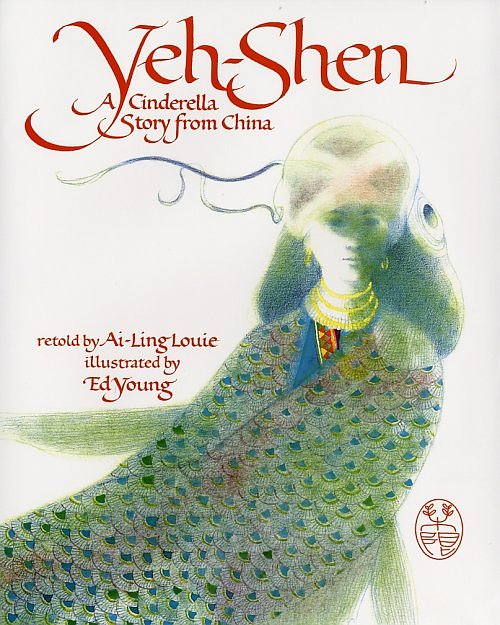 |
| Spoiler Alert! The last line is "...until the day they were crushed to death in a shower of flying stones." |
One of my favorite inquiries is to deduce and compare the values of different cultures based on their "Cinderella" stories. Probably the oldest, and my personal favorite, is Yeh-Shen from China.
03 February 2014
Student Blogging & Meaningful Connections: The Noobster
Using the Internet and specifically blogs to network classrooms around the world is a priceless learning activity, in my opinion. Writing for an audience provides incomparable motivation, receiving objective feedback provides authenticity, and engaging in developing as writers with other people promotes relevance and significance. I have blogged before about strategies for developing this network of connected young learners in the post, Engaging and Authentic Student Blogging.

-Answer five questions about yourself.
A wild tweet appeared
More recently, during a #teach2blog Twitter chat, a wild tweet appeared:Q1 What blogging activity can we initiate between our students, as a get to know each other activity? #teach2blogWhile I was unable to properly participate in the chat, I did come up with a solution based on the Liebster award. Why not make a Liebster for student bloggers?
— Paula Neidlinger (@pneid) January 16, 2014
Introducing the Noobster
Student bloggers are 'noobs', and I think that the negative connotation that accompanies that term in online video games and chat rooms needs to be reappropriated into something positive. A Noobster is awared to student bloggers who are expressing themselves and sharing openly. A Noobster honors their courage as communicators.
The structure for writing a Noobster post is very simple. Be sure to include these directions in yours!
It should include:
-The red Noobster 'Noob' image embedded.
-One paragraph linking to the post in which the Noobster was nominated and describing your thoughts about receiving the award.
-Answer five questions about yourself.
-Write five random and interesting facts about yourself.
-Ask five questions to your own Noobster nominees.
-Nominate and link to five other student bloggers, preferably in different classes, to make your own Noobster nominations.
Comment on those five blogs informing the authors that you awarded them with Noobsters so that they can write their own. Don't forget to leave a link to your Noobster post!
Have fun!
I'm excited to see if this works to help students to connect and get to know each other as authors and audience. Here's a link to the first Noobster post. Watch your comment box for your nomination, noobs!
23 January 2014
Blackout Poem - go for kill
Thought I'd have a go at a 'blackout poem'.

go for kill
repel a din
as other ants believe in ion ears
A poke or tack
in that terror wound we treat old
now have assailants
attack
say anything
rat alert
violence in ash
18 December 2013
PYP Exhibition Theme Synthesis
In the New Year, my sixth grade class will undertake our school's inaugural PYP Exhibition. Here's the description of the event from the International Baccalaureate Organization website:
"Students who are in their final year of the programme are expected to carry out an extended, collaborative inquiry project, known as the exhibition, under the guidance of their teachers.
The exhibition represents a significant event in the life of both the school and student, synthesizing the essential elements of the programme and sharing them with the whole school community. It is an opportunity for students to exhibit the attributes of the Learner profile that have been developing throughout their engagement with the programme. It is a culminating experience marking the transition from PYP to further steps in education.
Schools are given considerable flexibility in their choice of real-life issues or problems to be explored or investigated in the exhibition."
In the past years, I have visited several Exhibitions in Tokyo and explored the online presentations of dozens more. There are as many unique approaches as there are people participating! Designing an environment in which the exhibitioners will thrive is a grand and fascinating challenge and an ideal example of metateaching.
One aspect all examples I have viewed share in common is that they fall under one of the IB PYP Transdisciplinary Themes. However, in the Exhibition Guidelines, it states that one of the essential features should be to "synthesize aspects of all six transdisciplinary themes".
 |
| "synthesize aspects of all six transdisciplinary themes" |
I thought of one way to attempt this by way of inspiration from refrigerator poetry magnets. I simply printed the key terms from the six transdisciplinary themes, laminated and cut them out, attached magnets and arrayed them on a corner of our whiteboard. My class and I had a brief discussion of the themes and the goal to draw items from them of interest to us and rearrange them to create our own theme description. From that, we can create a title for our theme which can serve as a title for our Exhibition.
They began by playing, which is exactly what I had hoped for. The point is to play with the words to begin to explore our ideas. As our ideas become more organized, so should the words. I am extremely excited to begin our Exhibition inquiries, and have been planning activities all year as practice and preparation. I view it as an archetypal Independent Inquiry, and the first formal test of many of the principles of inquiry we have been exploring.
13 October 2013
Peace Cranes
Being a connected educator is not easy. Often, a single tweet or blog post will disrupt my plans for the day, bring my train of thought screeching to a halt, or overturn part of my philosophy of learning and teaching.
And I've enjoyed every minute of it! One of the best tweets I've received was from Melvina Kurashige, in Hawaii, inviting my class to exchange origami peace cranes as part of the Peace Crane Project. Who wouldn't want to do that?!

It was a simple and meaningful activity which involved writing messages of peace on paper, folding them into origami cranes, and sending them off. Just before sending ours, we received a package from Hawaii containing the beautiful cranes and postcard in the photo.
To bring our classes closer together, we held a brief Skype session in which the students asked each other questions about their schools, where they live, and their interests.
The activity connected perfectly with Shibuya Peace Day, one of our schoolwide events. I could imagine a class participating while reading Sadako and the Thousand Paper Cranes for a strong literature connection or as part of an arts & crafts unit on origami.
This fun global collaboration was most meaningful due to having a simple and worthy goal: to promote peace.
02 October 2013
Silent Discussion
Classroom discussion is a valuable opportunity to share ideas and develop communication skills, but often, the full benefits are enjoyed by the most extroverted and precocious students in the class. While I do believe that everyone should develop skills in all areas, especially those that are not as strong, I also believe that teachers, or better yet, metateachers, should design learning activities that provide equitable opportunities for learners with different strengths. The 'Silent Discussion' is just such an activity.
Simply explained, it's a way for a group to hold a discussion without speaking. I tried it recently and the results were fantastic, so I thought I'd share.
In our current unit of inquiry into Rights & Responsibilities, there are three lines of inquiry we have been following:
How rights are viewed globally
How rights are granted
Actions required to protect rights
Everyone knew that the lines of inquiry would guide our learning for the next few weeks, and the unit had been provoked by a guided inquiry into the Bayaka people of Central Africa. The Silent Discussion was intended to develop our understanding of the concept of Rights and focus our attention in a socially creative manner.
Organizing the Silent Discussion
1 Print the lines of inquiry, one each, on large paper (we used A3).
2 Place the papers at different corners of the room, or around a central table (consider elbow room).
3 Everyone browses silently with their favorite writing implement, writing comments and questions about the lines of inquiry.
4 Read others' comments and questions, reply, continue.

The activity started slowly, and grew in energy during a fifteen minute session. I injected some provocations and modeled different ways to engage with the activity (drawing pictures, circling and connecting different comments/questions). Finally, we posted the sheets and reflected on our thoughts and interactions.
I believe that the activity works best if it begins with abstract concepts or statements, rather than topics. It was also helpful to play thoughtful music (I generally stream KUSC).
It occurred to me that a techologized version of the Silent Discussion could be possible, but I rather like the museum-like energy generated by thoughtful browsing and the visceral nature of physically constructing our collective understandings on paper.
Another detail that would have extended the activity would be to post provocative images around the room, and perhaps provide videos or news articles to further contextualize the lines of inquiry.
Have you learned or taught through an activity like the Silent Discussion?
Simply explained, it's a way for a group to hold a discussion without speaking. I tried it recently and the results were fantastic, so I thought I'd share.
In our current unit of inquiry into Rights & Responsibilities, there are three lines of inquiry we have been following:
How rights are viewed globally
How rights are granted
Actions required to protect rights
Everyone knew that the lines of inquiry would guide our learning for the next few weeks, and the unit had been provoked by a guided inquiry into the Bayaka people of Central Africa. The Silent Discussion was intended to develop our understanding of the concept of Rights and focus our attention in a socially creative manner.
Organizing the Silent Discussion
1 Print the lines of inquiry, one each, on large paper (we used A3).
2 Place the papers at different corners of the room, or around a central table (consider elbow room).
3 Everyone browses silently with their favorite writing implement, writing comments and questions about the lines of inquiry.
4 Read others' comments and questions, reply, continue.

The activity started slowly, and grew in energy during a fifteen minute session. I injected some provocations and modeled different ways to engage with the activity (drawing pictures, circling and connecting different comments/questions). Finally, we posted the sheets and reflected on our thoughts and interactions.
I believe that the activity works best if it begins with abstract concepts or statements, rather than topics. It was also helpful to play thoughtful music (I generally stream KUSC).
It occurred to me that a techologized version of the Silent Discussion could be possible, but I rather like the museum-like energy generated by thoughtful browsing and the visceral nature of physically constructing our collective understandings on paper.
Another detail that would have extended the activity would be to post provocative images around the room, and perhaps provide videos or news articles to further contextualize the lines of inquiry.
Have you learned or taught through an activity like the Silent Discussion?
26 July 2013
Engaging and Authentic Student Blogging
Last year, I started blogging with my students on Kidblog. I immediately saw the benefits to their motivation to write and the potential to expand our classroom across oceans and continents. In the next school year, I plan to use our class blog as a hub for writing and collaboration with other classes around the world.
There are as many approaches to student blogging as there are innovative teachers doing it, but I have a suggestion related to promoting and commenting which I think would make blogging more engaging and authentic for students.
There are as many approaches to student blogging as there are innovative teachers doing it, but I have a suggestion related to promoting and commenting which I think would make blogging more engaging and authentic for students.
 |
| Photo by Lars Plougmann |
18 June 2013
EdTech Unplugged
Educational technology has become synonymous with computers. However, I often remind myself that any tool is technology, and different tools work better for different people for different jobs.
 |
| Late 20th century classic, the individual whiteboard. |
06 June 2013
Portfolio Artifact: Blog Post
This is how I document a blog post for a portfolio:

On top, a simple screenshot of the post. In the middle, the long URL, and on the bottom, a QR code linked to the post on the web.
03 June 2013
Blogging with students for authentic differentiation
During this school year, my students and I have enjoyed growing our class blog. From learning the difference between a 'post' and a 'comment' to interacting on a range of topics with other student bloggers around the world, the learning benefits have been incredible.
The greatest direct teaching benefit is the ability to differentiate tasks. To me, authentic differentiation means that students work on the same task with differentiated support, organization, and strategies. Differentiated should never be 'different'. I have discovered many ways to use our class blog to differentiate, but I would like to highlight the most powerful with an example of an assignment. Here's their current task posted on our blog:

The greatest direct teaching benefit is the ability to differentiate tasks. To me, authentic differentiation means that students work on the same task with differentiated support, organization, and strategies. Differentiated should never be 'different'. I have discovered many ways to use our class blog to differentiate, but I would like to highlight the most powerful with an example of an assignment. Here's their current task posted on our blog:
Follow the link and watch some TED talks about children. Please choose one and post it on your blog. Be sure to write your opinion about it as well as any personal comments you might have.
29 May 2013
Inquiring with a novel: Kensuke's Kingdom
No school year should go by without a class spending quality time with a novel. It could be in the form of a read aloud, literature circles, or independent reading and reflection. I like to use a blend of several approaches.
The first challenge is to select a great book. As an inquiry-based classroom, I thought it's critical that the novel we read together be directly related to our current theme and preferably to our central idea. We had been inquiring into children's opportunities and challenges. After discussions with colleagues, I thought Kensuke's Kingdom would be a perfect fit.

02 May 2013
Global Collaboration - Friends in Distant Lands
Our current Unit of Inquiry, on the theme of "Sharing the Planet", focuses on children's rights, risks, opportunities, and challenges. To make the unit action-oriented, we are taking a project-based approach with the goal of helping children.
To broaden our perspective and practice effective digital communication, we are collaborating with other classes in India, Canada, and Hong Kong. Because we are following our own inquiries, the key to collaboration thus far has been sharing reflections and student work.
I think it's important for the collaboration to be uncontrived. Each class should be at liberty to pursue their inquiries independently, utilizing each others' ideas, artifacts, and resources to achieve the service goals determined by the students.
To broaden our perspective and practice effective digital communication, we are collaborating with other classes in India, Canada, and Hong Kong. Because we are following our own inquiries, the key to collaboration thus far has been sharing reflections and student work.
 |
| Posters about the importance of not wasting food. |
14 April 2013
Is my classroom mastery-oriented?
Having spent the past year trying to understand and utilize the International Baccalaureate Organization Primary-Years-Program for the first time, I've applied a great deal of planning and instructional time to inquiry. I strongly believe in the model and its apparent intention to emphasize much more than academic performance in the education of children. It compliments my previous experiences perfectly and my students and I have enjoyed our journey thus far.
Last week, however, I received my class' results from the International Schools Assessment. Results in Mathematics were impressive, Reading were acceptable, but the Writing results were disappointing, especially non-fiction.
What happened?
Last week, however, I received my class' results from the International Schools Assessment. Results in Mathematics were impressive, Reading were acceptable, but the Writing results were disappointing, especially non-fiction.
What happened?
 |
| This guy is clearly master-oriented. |
03 April 2013
Los Perros Magicos de los Volcanes

Back in the Fall, we read one of my favorite books.
Our PYP Unit of Inquiry was entitled “We are what we believe”. We surveyed folk stories from around the world to draw inferences about various cultures’ beliefs and values from their literature. We read Aladdin from Syria, Momotaro from Japan, and Magic Dogs of the Volcanoes from El Salvador. It was a great chance to practice using Venn diagrams to compare and contrast.
The artwork is beautiful and the story is charming and unique. It also has English and Spanish on every page, which everyone always seems to enjoy. I highly recommend the book as well as the International Children’s Digital Library.
28 March 2013
Focus on Imagery
Draw and color a picture based on the poem.
 |
| Many students make a comic strip for this imagery activity. |
It's very simple, but I think it's a good warm up to focus on descriptive language. One thing I would change is the directions. It should read "draw and color a picture to show what is described in the poem", or something similar to reinforce the 'showing with words' concept of imagery.
03 March 2013
Blogging with elementary students - a formative reflection
What's working:
+Child-specific platform
+Specific assignments to learn and explore features of blogging, all documented within the blog.
+Utilizing blog for a variety of tasks, assessments, inquiry organization, interest-based explorations.
+Dedicated class time for blogging.
+Students writing with purpose.
+Seamless integration of technology, skills, and fun.
This year, I started my fourth grade class using Kidblog. What I liked about it when compared with the other very excellent platforms was the simplicity and control, which became an essential aspect of using it to teach and learn. As the students become familiar with the concepts and functionality, I slowly released the reins so that everyone was aware of, comfortable with, and hopefully confident about the experience as it expanded.
+Child-specific platform
+Specific assignments to learn and explore features of blogging, all documented within the blog.
+Utilizing blog for a variety of tasks, assessments, inquiry organization, interest-based explorations.
+Dedicated class time for blogging.
+Students writing with purpose.
+Seamless integration of technology, skills, and fun.
This year, I started my fourth grade class using Kidblog. What I liked about it when compared with the other very excellent platforms was the simplicity and control, which became an essential aspect of using it to teach and learn. As the students become familiar with the concepts and functionality, I slowly released the reins so that everyone was aware of, comfortable with, and hopefully confident about the experience as it expanded.
Subscribe to:
Posts (Atom)