
Showing posts with label music. Show all posts
Showing posts with label music. Show all posts
09 June 2015
Creativity = Motivation + Discipline
Symphony of Ideas has moved! Follow the link to read the post Creativity = Motivation + Discipline at its new home on WordPress.

14 January 2015
2014 - a year of connection, disconnection, and loss
I believe that I learned more in 2014 than in any year of my life since Kindergarten. A close second would have to have been 2001, during which I lived in New York City, studied composition with the great Ludmila Ulehla, and experienced the terror of '9/11', or 1996, when I graduated from high school and spent my first semester of college studying abroad in Nepal.
The past year was the Chinese Zodiac Year of the Horse, and I, being born in the Year of the Horse, sought to make it a year of work. I set my professional goal for the second half of the 2013-2014 school year to learn and practice as much as possible about Project Based Learning, self directed learning, and self determined learning in order to best facilitate my sixth grade class' culminating Exhibition. To that end, I participated in the Deeper Learning MOOC and Macromedia University Design Thinking MOOC.
With that learning as inspiration, I have been inquiring into and blogging about PBL, project management, and design thinking in education using the label 'LX Design'.
16 May 2014
SAMR v Smart-Board
In October, the dry-erase whiteboard in my classroom was replaced with a Promethean ActivBoard. The children at school aptly described it as a 'giant iPad' as they explored the functions of dragging and dropping with their fingers and writing with the provided styluses.
It was a much anticipated change, and now that I've had opportunities to integrate it into my approaches to teaching, this is an ideal opportunity to assess how I've utilized it according to the SAMR model of technology integration.

It was a much anticipated change, and now that I've had opportunities to integrate it into my approaches to teaching, this is an ideal opportunity to assess how I've utilized it according to the SAMR model of technology integration.
19 February 2014
Elementary Digital Music
For the past few weeks, I have enjoyed looking forward to my 'Music with Computers' after-school class on Wednesdays, for 2nd through 6th grade students.
It's a ten week course. During the first five weeks, I introduced various creation tools. The second half is for exploration, experimentation, composition, and creation.
The availability of intuitive, expressive, professional, free sound creation tools is exploding. I've enjoyed exploring to find a few of the best to share with students, as well as a few teachers who happened to be in the media center on Wednesday afternoon, and I would like to share them with you!
Synthesizer
 |
| SiON SoundObject Quartet |
17 November 2013
Make/Hack/Play Together 2
When Kevin Hodgson shared his song in the post, Making a Song, for the first 'make' of the Make/Hack/Play Together MOOC, I was immediately impressed by its mournful mood. I thought it would be appropriate for this week's 'digital make' to hack his song by arranging it for string quartet using MuseScore. Here's a link to my work-in-progress, Hacking a Song.
I've only spent a short time on it, but have found some bits I like and some that probably wouldn't make the final cut. Arranging is different that writing a song. It's rather scientific and requires taking into account many variables such as register, the mechanics of the instruments involved, acoustics, etc.
I even started to 'play' at the end, but it's getting late and I can't tell whether those ideas are worth staying up for...
The trickiest part, however, is capturing the mood. Since the mood of Kevin's song is what struck me, I tried to interpret that feeling for a different ensemble. It never works to copy it. It's more like a translation than anything else. The sounds, like words, may have the same meanings, but they don't say the same things.
Anyway, I hope you enjoy reading and listening to my little, albeit, incomplete piece.
17 September 2013
My String Quartet
I've been meaning to write a string quartet for almost fifteen years. My multitude of notebooks contain dozens of beginnings, always unsatisfactory and abandoned. Even more fester in musical purgatory in long forgotten folders on dusty old hard drives.
Why?
There is an ethos surrounding the string quartet. Nearly every composer of Western Classical music has written them, and often they were the medium for innovation and experimentation. Even Ravel and Debussy, not fans of tradition, wrote one each, almost as if to prove that they could do it. I count those and the string quartets of Bartok, Ginastera, and Berg as some of my most revered artistic creations, and I can literally listen to Haydn, Mozart, Mendelssohn, and Schubert string quartets all day long.
 |
| Kneisel Quartet c1890 (photo public domain) |
05 September 2013
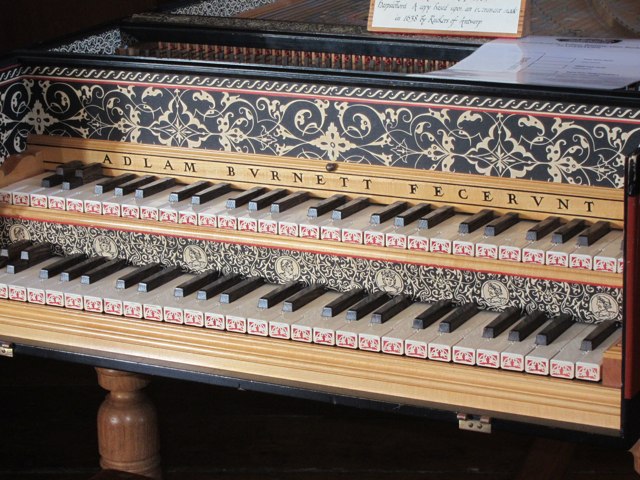
Musical Keyboard Inquiry
In addition to being a PYP Grade 6 teacher, I also teach music to Grades 4-6, in addition to my own homeroom. Last year, I taught music to Grades 1-6, but as the school is grows, the schedule gets a bit tighter.
The fourth graders are just beginning their musical keyboard study, so I thought we could set the stage with a listening-based inquiry.
In the activity, we listened to recordings of various keyboard instruments from hurdy-gurdy to minimoog for which I had gathered YouTube links. After each listen, students responded to the question:
11 June 2013
Bill Evans - Creative Process and Self Teaching
What is genius?
Most of us grew up believing that genius is inherent in certain lucky people. Similarly, "talent" is often considered to be some sort of genetic trait. Stories of savants, from Mozart to Fischer, perpetuate this idea. Particularly in music, an inordinate amount of attention is given to prodigies who play sophisticated music at a very young age.
Is genius genetic? Is talent luck?
As a Constructionist teacher and advocate for Genius Hour and 20% Time in Education, I have inquired substantially into Interest-Driven Learning, Connected Learning, Social Creativity, and Independent Inquiry. Leaders in these movements need concrete models to help inspire in learners the idea that genius is not granted, but built.
 |
| Legendary jazz pianist, Bill Evans. |
21 May 2013
Undokai - Demonstrating the Importance of PE
One unique feature the international school in which I teach is our relationship with the Japanese public school whose campus we share. The students regularly engage in exchange activities and we are currently preparing for the annual sports festival, Undokai (運動会).


05 May 2013
Super-curricular activity - 日本舞踊 - Traditional Japanese Dance
Yesterday afternoon, my wife and I took an excursion to the National Theater of Japan to see one of my fourth grade students participate in a Nihon Buyo recital. I was impressed by the quality of the production and enjoyed it very much.
I was reminded how much there is to learn and do outside of school and inspired to motivate my students (as well as myself) to get more involved in extra-curricular activities.
Or, instead of 'extra-curricular', how about 'super-curricular'?
 |
| Not my student. There was no photography allowed in the theater. |
I was reminded how much there is to learn and do outside of school and inspired to motivate my students (as well as myself) to get more involved in extra-curricular activities.
Or, instead of 'extra-curricular', how about 'super-curricular'?
12 April 2013
Student-created rubrics
I'm fanatical about rubrics. Bridging the divide between specific learning outcomes (standards) and constructionist inquiry would be difficult for me without them.

In the photo, students work in pairs to develop a rubric for assessing an acting performance. They already participated in our school musical in December, so this is a chance for them to develop their understandings of the vocabulary of the theater. We've used rubrics for dozens of assessments throughout the year, so this is a chance to authentically apply what they have learned.
After the pairs completed their rubrics, they switched partners a few times to compare and contrast. Finally, we projected the empty chart on the wall and filled it in based on what they created while collaborating.
16 March 2013
Standing at the crossroads of everything
There may not be many issues on which every rational person can agree, but one of those is certainly the importance of children and their learning.
Consequently, everyone seems to have an opinion about elementary education.
Bloggers agree that kids should blog. Nature lovers insist they should spend more time outside. Musicians are convinced every kid should play an instrument. Inquiry advocates want to see them wondering and wandering, while politicians seem to want to see them at rows of desks with their heads buried in a test. 'Makers' think children should tinker. Counselors think emotional and social health is paramount. Children should think globally, be involved in their communities, pursue their interests, try new things, etc, ad nauseum. They voice those opinions because they are speaking from their passions.
And they're all right. Children should do all those things, and more, and great teachers know it.
Subscribe to:
Posts (Atom)