
Showing posts with label social creativity. Show all posts
Showing posts with label social creativity. Show all posts
09 June 2015
Creativity = Motivation + Discipline
Symphony of Ideas has moved! Follow the link to read the post Creativity = Motivation + Discipline at its new home on WordPress.

08 December 2014
Making action visible in the PYP
Of the facets of the IB Primary Years Program, my Grade 5/6 class emphasizes Action by focusing on three elements from our school's Mission Statement & Philosophy: 'inspired', 'independent', and 'contribute to world peace'.
With this in mind, in the first week of school we discussed and agreed to a class identity: Uniters.
Rather than addressing my class as 'Grade 5/6' or 'children' or 'hey you', I say 'Uniters'. Aesthetically, it's a bit like being a team of superheroes. Compared to being called a number or being identified by one's category, who wouldn't prefer being called 'Uniter', 'Peacemaker', or 'Humanitarian'?
The theme of 'unity' provides a rich context for inspiring, evoking, sharing, discussing, and reflecting on action. An emphasis on action will be particularly important in the spring when this class prepares their PYP Exhibition, a self-directed inquiry project with the ambitious goals of authentic action, community service, and engagement with globally significant issue.
Organizing
Along the LX Design line of inquiry, I realized that we need an interactive tool to document and share our 'action' in its various forms. At first I considered digital tools, but none seemed to provide the immediacy and high visibility required. Thinking of my wife, Yuka's 'inspiration board' at home, I wondered if a bulletin board would be best.
The following tweet from Craig Dwyer and the informative Action in the PYP document to which it links helped to stimulate my thinking further.
What does ACTION, Look Like, Sound Like, Feel Like? https://t.co/y753w9ilPh #pypchat #ibpyp #inquirymaths
— Craig (@DwyerTeacher) September 8, 2014
03 December 2014
How to eat sushi (like a snob)
A long time ago, I submitted my How to eat sushi (like a snob) 'how to' video to the Making Learning Connected Make Bank, a fantastic cooperative repository of accomplishment and inspiration. According to Terry Elliot's post, the Make Bank is a Convivial Tool, and I agree whole-heartedly.
You may also find this article from The Creativity Post interesting: Seven Life Lessons From Making Sushi contains life and learning lessons from one of Japan's most renowned sushi chefs, Jiro Ono.
If you're hungry for more cat sushi pictures, please savor this post from Spoon & Tamago: Nekozushi | an absurd combination of cats and sushi.
You may also find this article from The Creativity Post interesting: Seven Life Lessons From Making Sushi contains life and learning lessons from one of Japan's most renowned sushi chefs, Jiro Ono.
If you're hungry for more cat sushi pictures, please savor this post from Spoon & Tamago: Nekozushi | an absurd combination of cats and sushi.
13 November 2014
Maker Club year 1
One year ago, I started a Maker Club at my school as part of our after school program. While maker spaces for older learners generally focus on robotics and digital creation, I believe that an elementary maker experience should start from concrete, physical creation. Most of our materials were donated by families, but we also frequently raid the school art supplies.
Based on my participation in the Learning Creative Learning MOOC in 2013, the initial guiding principles for our Maker Club were Independence and Social Creativity.
Independence
It's critical that Maker Club have no assignments. The only requirement is to always be 'making'. Imagining, researching, designing, sharing, and reflecting are all parts of the making process.
A Maker Faire often includes digital production, as well as arts and crafts, engineering and construction, cooking, scientific experiments and demonstrations, and the visual and performing arts. There are no artificial limits.
A Maker Faire often includes digital production, as well as arts and crafts, engineering and construction, cooking, scientific experiments and demonstrations, and the visual and performing arts. There are no artificial limits.
For the first few meetings, there was a refrain of 'What should I make?', 'What do you want to make?'. This dialog is indicative of empowerment. As young makers realize that they are in control of their learning in their maker space, their creativity is ignited.
In a sense, this is what makes a maker space. Of course, maker tools and materials are important, but most important is fostering an environment in which everyone feels safe to experiment and create.
Every maker must be encouraged to try anything, and indeed, 'makes' that fail are not failures at all. Failures are courageous learning experiences and opportunities to safely practice a growth mindset.
02 February 2014
Deeper Learning Student Work
Looking at student work
I'd like to share three pieces of student work, each of which shows unique applications of deeper learning.
Landforms
The first is a Grade 2 'landforms' project. The task was to build and paint an island with landforms. The example shows a few examples of deeper geographical understanding, especially that the river is carved into the land, rather than simply painted on, and that it flows from the hills to the ocean.
However, it would have been better to provide greater opportunities to practice with the clay and paint in a creative way. The student's reflection, 'I could to better', is very revealing of the fact that this little project utilized too many different, new skills. I should have planned a stand-alone art unit using these tools before applying them in this Geography activity.

05 December 2013
Independent Inquiry: Origami
A group of students in my class is exploring the Origami Club website to learn to fold new and more complex creations. The site includes hundreds, if not thousands of designs with blueprint and animated instructions.
Connected Learning like this is very inspiring. They are utilizing the Internet to pursue their inquiry, using mathematical vocabulary in authentic contexts, cooperating by taking turns choosing which design to follow, helping each other, and enjoying themselves.

I'm interested to see if any of them take the inquiry further, perhaps by earning a DIY Papercrafter Patch or participating in an online community like The Origami Forum. As their teacher, it's important to make sure that they have access to those opportunities, so I added links to the Independent Inquiry page on our class wiki.

Connected Learning like this is very inspiring. They are utilizing the Internet to pursue their inquiry, using mathematical vocabulary in authentic contexts, cooperating by taking turns choosing which design to follow, helping each other, and enjoying themselves.

I'm interested to see if any of them take the inquiry further, perhaps by earning a DIY Papercrafter Patch or participating in an online community like The Origami Forum. As their teacher, it's important to make sure that they have access to those opportunities, so I added links to the Independent Inquiry page on our class wiki.

02 December 2013
The Evolution of Independent Inquiry
When I introduced Independent Inquiry in my Grade 4 class during the last school year, it was out of a desire to reinvent homework as a more relevant activity connecting learning at school with learning at home. The primary inspiration was the MIT Media Lab Learning Creative Learning course, and in particular, being introduced to Connected Learning.
Interest-driven learning comes as naturally to us human beings as breathing and scratching ourselves. The brain is made for it. We naturally seek creative solutions to problems and desire to learn what is useful and/or fun. I also became fascinated with the Maker Education Initiative and the implications of purposeful play for STEM (Science, Technology, Engineering, Mathematics) education.
Why does school try to make learning so hard?
We began using a Google Form to reflect on our inquiries and holding weekly meetings to discuss the independent projects we were doing at home. Some highlighted projects can be found by searching the independent inquiry label here on Symphony of Ideas.
Soon after, I discovered Genius Hour. There were thousands of teachers around the world providing class time for students to pursue their passions and interests! Teaching at an inquiry school, I always provide time for independent research and autonomous learning opportunities, however, only along the lines of inquiry specified in our units.
Interest-driven learning comes as naturally to us human beings as breathing and scratching ourselves. The brain is made for it. We naturally seek creative solutions to problems and desire to learn what is useful and/or fun. I also became fascinated with the Maker Education Initiative and the implications of purposeful play for STEM (Science, Technology, Engineering, Mathematics) education.
Why does school try to make learning so hard?
We began using a Google Form to reflect on our inquiries and holding weekly meetings to discuss the independent projects we were doing at home. Some highlighted projects can be found by searching the independent inquiry label here on Symphony of Ideas.
Soon after, I discovered Genius Hour. There were thousands of teachers around the world providing class time for students to pursue their passions and interests! Teaching at an inquiry school, I always provide time for independent research and autonomous learning opportunities, however, only along the lines of inquiry specified in our units.
The time had come to blow it wide open. I started a wiki to clarify purpose for myself and share with other educators, collect relevant resources and supporting articles, and publish my students' reflections.
17 October 2013
Constructing The Learner Profile
One of the most positive and sincere refrains one hears in education is to teach 'the whole child'. Most of the time, however, what that means isn't clear. Common sense dictates that we should care about students' emotional and social growth as much as academic. Inquiries into learning modalities or multiple intelligences seem to shed light onto planning more inclusive learning opportunities. As a slogan, 'teach the whole child' is perfectly fine.
The IB Learner Profile takes a much needed step toward articulating more specifically what the attributes of a 'whole child', or indeed any person, are.
My approach to reflecting on and documenting development of the Learner Profile in my classroom is very simple. The attributes are posted at the edges of a large blank display. As students demonstrate an attribute, they or I suggest to attach an artifact of the event on the display. When someone 'nominates' an artifact, it's an ideal opportunity for reflective discussion and celebration of our achievements!
Thus far, we determined that exchanging origami Peace Cranes with students in Hawaii showed that we are caring, so we stuck some cranes on the board.
 |
| Our origami Peace Cranes show that we are caring. |
 |
| Our learner profile will fill up as the year progresses. |
Visualizing our thinking and learning is a fun and remarkably useful endeavor, particularly in elementary school. In what ways are your students showing what they have learned and how they have grown?
02 October 2013
Silent Discussion
Classroom discussion is a valuable opportunity to share ideas and develop communication skills, but often, the full benefits are enjoyed by the most extroverted and precocious students in the class. While I do believe that everyone should develop skills in all areas, especially those that are not as strong, I also believe that teachers, or better yet, metateachers, should design learning activities that provide equitable opportunities for learners with different strengths. The 'Silent Discussion' is just such an activity.
Simply explained, it's a way for a group to hold a discussion without speaking. I tried it recently and the results were fantastic, so I thought I'd share.
In our current unit of inquiry into Rights & Responsibilities, there are three lines of inquiry we have been following:
How rights are viewed globally
How rights are granted
Actions required to protect rights
Everyone knew that the lines of inquiry would guide our learning for the next few weeks, and the unit had been provoked by a guided inquiry into the Bayaka people of Central Africa. The Silent Discussion was intended to develop our understanding of the concept of Rights and focus our attention in a socially creative manner.
Organizing the Silent Discussion
1 Print the lines of inquiry, one each, on large paper (we used A3).
2 Place the papers at different corners of the room, or around a central table (consider elbow room).
3 Everyone browses silently with their favorite writing implement, writing comments and questions about the lines of inquiry.
4 Read others' comments and questions, reply, continue.

The activity started slowly, and grew in energy during a fifteen minute session. I injected some provocations and modeled different ways to engage with the activity (drawing pictures, circling and connecting different comments/questions). Finally, we posted the sheets and reflected on our thoughts and interactions.
I believe that the activity works best if it begins with abstract concepts or statements, rather than topics. It was also helpful to play thoughtful music (I generally stream KUSC).
It occurred to me that a techologized version of the Silent Discussion could be possible, but I rather like the museum-like energy generated by thoughtful browsing and the visceral nature of physically constructing our collective understandings on paper.
Another detail that would have extended the activity would be to post provocative images around the room, and perhaps provide videos or news articles to further contextualize the lines of inquiry.
Have you learned or taught through an activity like the Silent Discussion?
Simply explained, it's a way for a group to hold a discussion without speaking. I tried it recently and the results were fantastic, so I thought I'd share.
In our current unit of inquiry into Rights & Responsibilities, there are three lines of inquiry we have been following:
How rights are viewed globally
How rights are granted
Actions required to protect rights
Everyone knew that the lines of inquiry would guide our learning for the next few weeks, and the unit had been provoked by a guided inquiry into the Bayaka people of Central Africa. The Silent Discussion was intended to develop our understanding of the concept of Rights and focus our attention in a socially creative manner.
Organizing the Silent Discussion
1 Print the lines of inquiry, one each, on large paper (we used A3).
2 Place the papers at different corners of the room, or around a central table (consider elbow room).
3 Everyone browses silently with their favorite writing implement, writing comments and questions about the lines of inquiry.
4 Read others' comments and questions, reply, continue.

The activity started slowly, and grew in energy during a fifteen minute session. I injected some provocations and modeled different ways to engage with the activity (drawing pictures, circling and connecting different comments/questions). Finally, we posted the sheets and reflected on our thoughts and interactions.
I believe that the activity works best if it begins with abstract concepts or statements, rather than topics. It was also helpful to play thoughtful music (I generally stream KUSC).
It occurred to me that a techologized version of the Silent Discussion could be possible, but I rather like the museum-like energy generated by thoughtful browsing and the visceral nature of physically constructing our collective understandings on paper.
Another detail that would have extended the activity would be to post provocative images around the room, and perhaps provide videos or news articles to further contextualize the lines of inquiry.
Have you learned or taught through an activity like the Silent Discussion?
03 September 2013
Back-to-School Marshmallow Spaghetti Tower Challenge!
I was first introduced to this activity during the MIT Media Lab Learning Creative Learning course. There are a few variations, such as limiting the amount of resources or including tape, but for my students' first day of sixth grade, I let chaos reign.
I gave each group a package of dry spaghetti, three small bags of marshmallows, and the simplest rules I could think of:
1 Build the tallest structure you can.
2 You may only use the materials I gave you.
3 We'll measure after 60 minutes.

02 August 2013
Connected Learning or just learning?
Make Cycle 6 (envisioning)
I was a rather curious child and a natural inquirer. A particular interest in cars led me to subscribe to magazines like Road & Track and Automobile, talk to knowledgeable people about how cars work, and even invest in a wonderful book called Auto Math Handbook. It provided the engineering foundation for many car designs which I diligently drew while summarily ignoring the television.
I was a rather curious child and a natural inquirer. A particular interest in cars led me to subscribe to magazines like Road & Track and Automobile, talk to knowledgeable people about how cars work, and even invest in a wonderful book called Auto Math Handbook. It provided the engineering foundation for many car designs which I diligently drew while summarily ignoring the television.
,_5._April_2012,_D%C3%BCsseldorf.jpg) |
| I'm pretty sure one of my designs inspired the creation of the Bugatti Veyron. |
20 July 2013
I want workbenches in my classroom.
Make Cycle 5 (reflection)
The first assignment I remember from my 'teacher training' was to make a map of my ideal elementary classroom. It was based on what I called 'zones'. There was a quiet reading zone equipped with beanbags, a gallery zone with easels dedicated to exhibiting artwork, and a vegetable garden under the windows. My proudest feature, however, was the workbenches. When I presented my map to the class, I spoke about how it was fine for students to have desks, but I wanted another area without chairs, just large, tall tables around which they could collaborate and build.
I wanted workbenches.
I had a few years experience teaching musical keyboard classes. I had wild ideas of 'open school' and giant learning spaces in which the boundaries between teacher and student, classroom and community, were smeared beyond recognition.
The first assignment I remember from my 'teacher training' was to make a map of my ideal elementary classroom. It was based on what I called 'zones'. There was a quiet reading zone equipped with beanbags, a gallery zone with easels dedicated to exhibiting artwork, and a vegetable garden under the windows. My proudest feature, however, was the workbenches. When I presented my map to the class, I spoke about how it was fine for students to have desks, but I wanted another area without chairs, just large, tall tables around which they could collaborate and build.
I wanted workbenches.
I had a few years experience teaching musical keyboard classes. I had wild ideas of 'open school' and giant learning spaces in which the boundaries between teacher and student, classroom and community, were smeared beyond recognition.
All I knew was that children learn best when they are self-directed and encouraged to collaborate.


30 June 2013
Toy Hack - Thomas the Train Plays Marimba
For my Making Learning Connected Toy Hack, I used a laundry clip to attach one of my almost two-year-old son's marimba mallets to his Thomas the Train toy. I had to wait until he was taking a nap because he doesn't appreciate when I fiddle with his toys.
This is exactly the type of toy hack I would have tried as a child. It started from a novel and fairly simple idea. Acquired the time and materials. Put it all together. A moment of triumphant elation when it works. Then disappointment or dissatisfaction coupled with a nagging desire to make it better, louder, faster, more complex...
This is exactly the type of toy hack I would have tried as a child. It started from a novel and fairly simple idea. Acquired the time and materials. Put it all together. A moment of triumphant elation when it works. Then disappointment or dissatisfaction coupled with a nagging desire to make it better, louder, faster, more complex...
29 June 2013
Introduction for Making Learning Connected MOOC
I 'signed up' a little late, but should be caught up by the end of the weekend. I'm so excited that I found this MOOC, Making Learning Connected, because it applies directly to my Independent Inquiry project and will be fun professional development for the summer. I am an elementary school teacher at an international school in Tokyo.
By way of an introduction, please visit my SoundCloud profile and listen to my music. I composed all of the music on there, and will be uploading more soon, including my current improvisational electronic project.

https://soundcloud.com/bartlmiller
18 June 2013
EdTech Unplugged
Educational technology has become synonymous with computers. However, I often remind myself that any tool is technology, and different tools work better for different people for different jobs.
 |
| Late 20th century classic, the individual whiteboard. |
11 June 2013
Bill Evans - Creative Process and Self Teaching
What is genius?
Most of us grew up believing that genius is inherent in certain lucky people. Similarly, "talent" is often considered to be some sort of genetic trait. Stories of savants, from Mozart to Fischer, perpetuate this idea. Particularly in music, an inordinate amount of attention is given to prodigies who play sophisticated music at a very young age.
Is genius genetic? Is talent luck?
As a Constructionist teacher and advocate for Genius Hour and 20% Time in Education, I have inquired substantially into Interest-Driven Learning, Connected Learning, Social Creativity, and Independent Inquiry. Leaders in these movements need concrete models to help inspire in learners the idea that genius is not granted, but built.
 |
| Legendary jazz pianist, Bill Evans. |
14 May 2013
Learning Creative Learning - Summative Reflection
At the close of the MIT Media Lab 'Learning Creative Learning' Course, I've been enjoying organizing my thoughts to write this summative reflection. I took the course as an elementary school teacher looking to expand my approaches to teaching and learning, so most of what I took from it is what I can apply to my profession, although my experiences were not limited to the classroom-related.
Introduction to MOOCs
This was my first Massive Open Online Course. I was most impressed by the lack of deadlines. I could complete reading and watch class session videos at my own pace, yet the imminence of the live sessions helped me to maintain a reasonable schedule. Despite not being required, I sincerely looked forward to watching each session video each week, diligently read assignments, and felt odd pangs of guilt when I fell behind.
Introduction to MOOCs
This was my first Massive Open Online Course. I was most impressed by the lack of deadlines. I could complete reading and watch class session videos at my own pace, yet the imminence of the live sessions helped me to maintain a reasonable schedule. Despite not being required, I sincerely looked forward to watching each session video each week, diligently read assignments, and felt odd pangs of guilt when I fell behind.
24 March 2013
Metateaching: Teachers as anthropologists and designers.
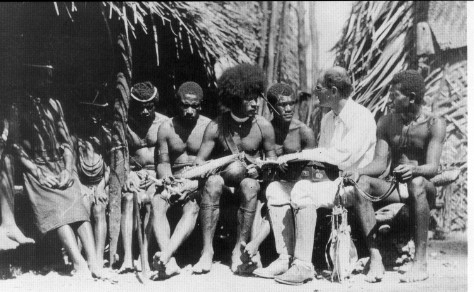
While reading Gerhard Fischer's Understanding, Fostering, and Supporting Cultures of Participation, I was transported back in time to my semester abroad in Nepal in 1996 when I was immersed in a foreign culture for the first time and inundated with fifteen units of Anthropology and Cultural Geography classes. In the shadow of Mt Nilgiri, we often debated individualism versus collectivism or the importance of the self versus the importance of the group.
Every discussion reached a similar conclusion, surprisingly quickly considering the effects of altitude on alcohol tolerance: A person both supports and is supported by a community.

Every discussion reached a similar conclusion, surprisingly quickly considering the effects of altitude on alcohol tolerance: A person both supports and is supported by a community.
11 February 2013
Cue the conductor.
When the conductor enters the stage, there is rousing applause.
As a teacher, I have never been afforded such an honor. The closest I've come is to walk into a room full of students who suddenly cease talking upon noticing me or engage in a rousing chorus of disparate requests.
Yet, I am a conductor. I am a conductor of ideas in a symphony.
The word symphony has two meanings. The first is the orchestra.
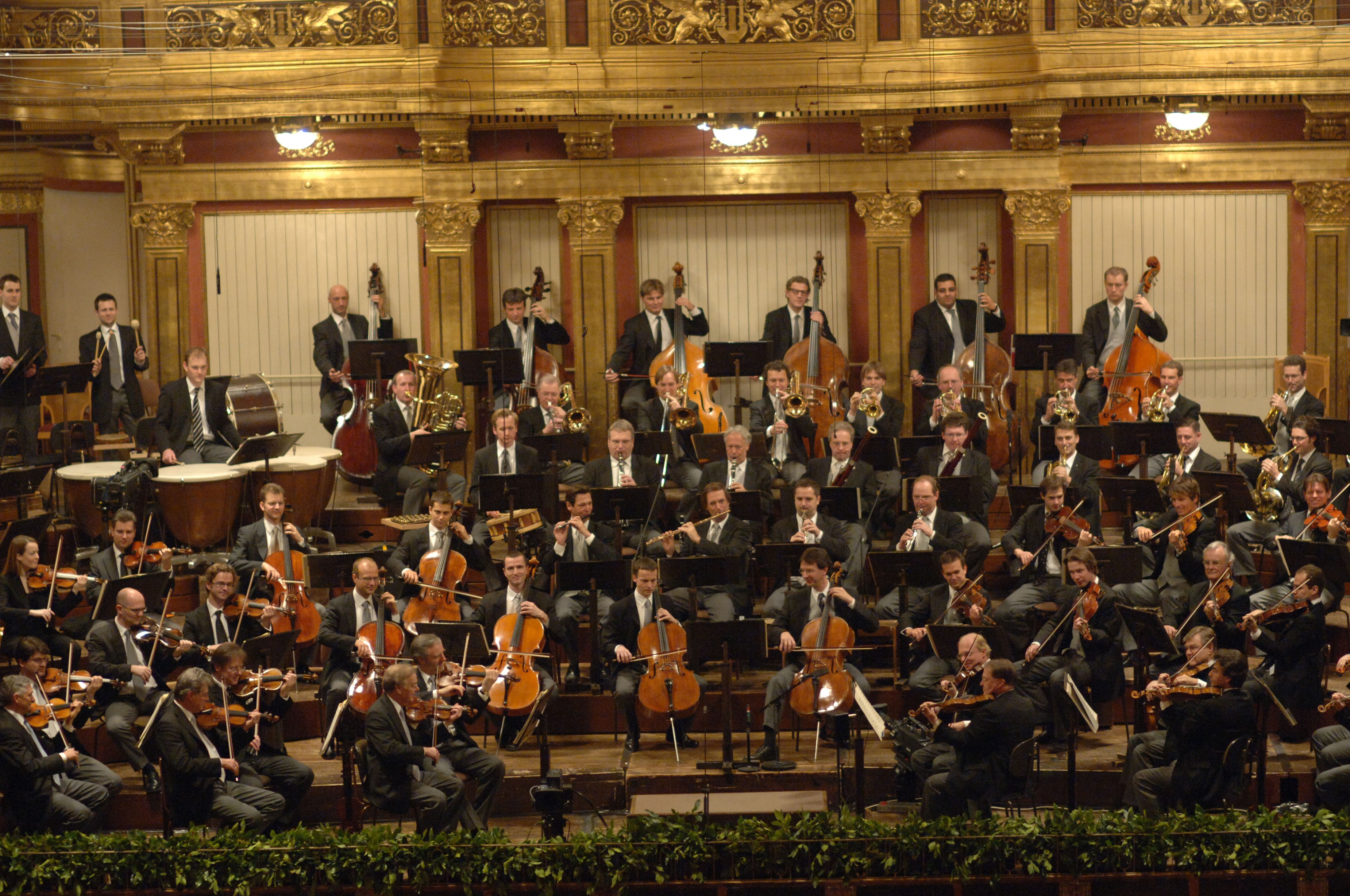
 There is the 'classical' instrumentation: violins, violas, cellos, woodwinds in pairs, horns, timpani, but even within the classical era, it changed. In fact, the purpose of the symphony orchestra was to be able to create any sound. Over the centuries, dozens of instruments have been added as permanent members, some just for special effects, some to fulfill some kind of creative, if not sometimes bizarre, vision. It's just like a classroom.
My classroom is my orchestra, prepared to suit the creative, if not sometimes bizarre, learning needs of anyone who happens by. The traditional classroom had chairs, like mine, and books as well. But mine has an interactive whiteboard and wikipedia.
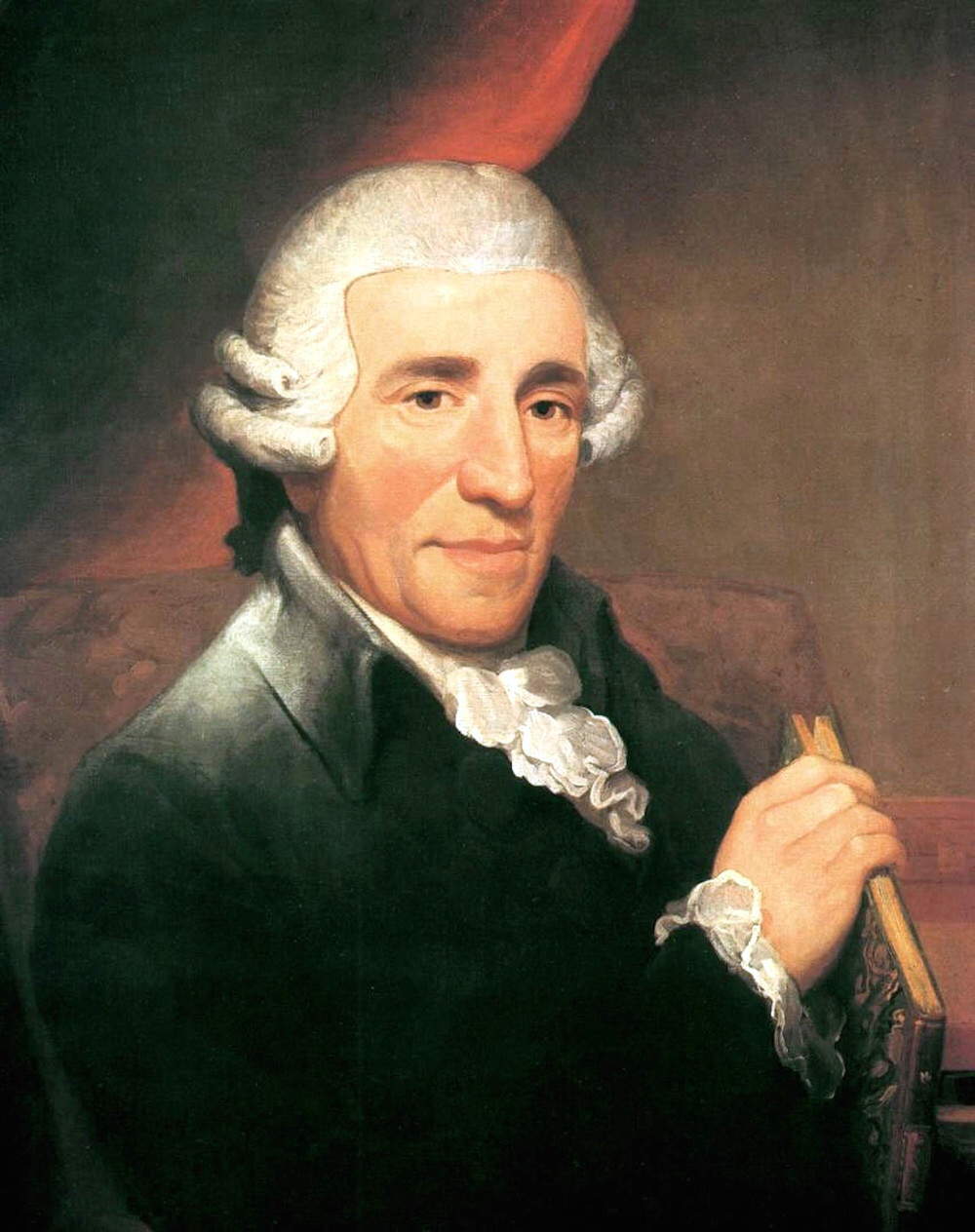
The other definition of symphony refers to the form. Again, there is a traditional form. Not to be too specific, there are movements in related key centers. Each movement follows a dance form, tempo, and rhythm. If you're curious, listen to as much Haydn as possible, and notice the similarities between his symphonies because he's the source from which scholars derived the notion of the classical symphonic form.
 Although not known for my frilly neckwear, I do kind of look like Maestro Haydn.
Thankfully, composers have ravaged the classical symphonic form mercilessly. From Sibelius' Symphony No.7 in one movement to Messiaen's Turangalila Symphony in ten, and beyond, the form has always been at the command of creativity and the musical expression of the times. The analogy can be applied to learning. What children learn now may only slightly resemble what they might have learned in the eighteenth century, because it is the purpose of the classroom to prepare students for life in their time.
The creativity of each student individually and in collaboration with each other determines the form, ensemble, and ultimately, the performance. Every child is unique. Every path to understanding is unique. Every idea is unique.
The students are the orchestra. I am their conductor. Our ideas are our symphony.
As a teacher, I have never been afforded such an honor. The closest I've come is to walk into a room full of students who suddenly cease talking upon noticing me or engage in a rousing chorus of disparate requests.
Yet, I am a conductor. I am a conductor of ideas in a symphony.
The word symphony has two meanings. The first is the orchestra.
My classroom is my orchestra, prepared to suit the creative, if not sometimes bizarre, learning needs of anyone who happens by. The traditional classroom had chairs, like mine, and books as well. But mine has an interactive whiteboard and wikipedia.
The other definition of symphony refers to the form. Again, there is a traditional form. Not to be too specific, there are movements in related key centers. Each movement follows a dance form, tempo, and rhythm. If you're curious, listen to as much Haydn as possible, and notice the similarities between his symphonies because he's the source from which scholars derived the notion of the classical symphonic form.
Thankfully, composers have ravaged the classical symphonic form mercilessly. From Sibelius' Symphony No.7 in one movement to Messiaen's Turangalila Symphony in ten, and beyond, the form has always been at the command of creativity and the musical expression of the times. The analogy can be applied to learning. What children learn now may only slightly resemble what they might have learned in the eighteenth century, because it is the purpose of the classroom to prepare students for life in their time.
The creativity of each student individually and in collaboration with each other determines the form, ensemble, and ultimately, the performance. Every child is unique. Every path to understanding is unique. Every idea is unique.
The students are the orchestra. I am their conductor. Our ideas are our symphony.
Subscribe to:
Posts (Atom)