Showing posts with label social studies. Show all posts

17 February 2015

What is technology?

On Monday morning, I embarked upon a unit of inquiry with my grade 5/6 class by using our usual 'warm up' routine to reflect on and discuss the slide below.


As students arrive in the morning, when possible, I project some sort of provocation, sometimes directly connected to our inquiries, sometimes specifically not, and sometimes just for fun (link to 'warm up' slides).

Many students sit down and begin writing or sketching immediately, while some prefer to converse before working independently. After a few minutes, we share and discuss our ideas.

This 'technology' provocation was effective and I was pleasantly surprised by students' insights. Their responses included definitions with words like 'tools'. 'useful', and 'solve problems'. Some also alluded to negative as well as positive effects of technology. At the conclusion of our brief discussion, I introduced our central idea for the unit: Scientific understanding constantly evolves to build and destroy. (link to unit planner)

Before setting the students loose, we will conduct a modeled inquiry into 3D printing. The purpose will be to model a standard inquiry process as well as generate interest in various aspects of technology including scientific, social, artistic, and cultural. It was extremely effective last year and, especially based on my current class' formative understandings, I'm confident that the next few weeks will be fun and enlightening.

24 February 2014

Compare cultures through literature


Spoiler Alert! The last line is "...until the day they were crushed to death in a shower of flying stones."
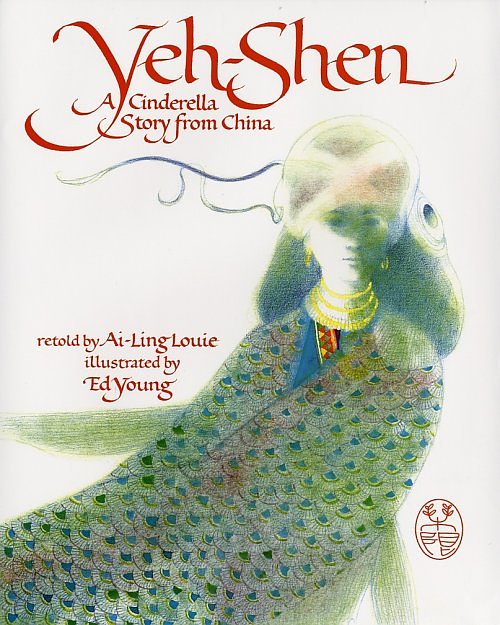
One of my favorite inquiries is to deduce and compare the values of different cultures based on their "Cinderella" stories. Probably the oldest, and my personal favorite, is Yeh-Shen from China.


13 February 2014

Pottery Field Trip

My class had an outstanding field trip today, in connection with our unit of inquiry into the effects of changes in science and technology. We recently completed a modeled inquiry into 3D printing, introduced in the post, Modeling Inquiry. Having delved into the future of manufacturing, a visit to Uzumako Ceramic Art School was ideal to provide perspective by experiencing one of the world's most ancient crafts, pottery.

Student hands dig into wet, spinning clay

02 February 2014

Deeper Learning Student Work

Looking at student work

I'd like to share three pieces of student work, each of which shows unique applications of deeper learning.

Landforms

The first is a Grade 2 'landforms' project. The task was to build and paint an island with landforms. The example shows a few examples of deeper geographical understanding, especially that the river is carved into the land, rather than simply painted on, and that it flows from the hills to the ocean.

However, it would have been better to provide greater opportunities to practice with the clay and paint in a creative way. The student's reflection, 'I could to better', is very revealing of the fact that this little project utilized too many different, new skills. I should have planned a stand-alone art unit using these tools before applying them in this Geography activity.


07 November 2013

BYOT Field Trip

My sixth graders and I took a field trip to The Bandai Edison Museum yesterday and I thought it was an ideal chance for a Bring-Your-Own-Technology experiment. Our current inquiry focuses on personal histories and the primary objective of the field trip was to reflect on how the Thomas Edison Exhibition tells the story of his life.

The task was to choose three artifacts in the exhibit and deduce what invention led or might have led to it, and what inventions came after. Usually, iPads and other mobile digital devices are not allowed in school, but for the field trip, I said they can bring any technology they want to complete their assignment. I created a simple google form and posted it on our class blog for those with Internet access. Some students chose to write their reflections with paper and pencil, but a few brought their iPads, smartphones, and a couple DSs, and were excited to use them!


After completing their reflections, some students took photos or made videos of their favorite exhibits. It felt great to provide them with the autonomy to use their technological resources to inspire and motivate their inquiries. The enhanced engagement and enthusiasm to share their work was a clear benefit.


I plan to have a BYOT policy in place in the classroom when we start working in earnest on our culminating Exhibition, and the field trip experiment demonstrated to me that these technologies, coupled with independence, are remarkable learning multipliers.

In our reflective discussion, many students cited their digital products when describing Edison's place in history and the connections between inventions. I'm considering ways that this strategy could be expounded to transform field trips into "Connected Learning Expeditions" and would appreciate knowing your experiences and thoughts!

13 October 2013

Peace Cranes

Being a connected educator is not easy. Often, a single tweet or blog post will disrupt my plans for the day, bring my train of thought screeching to a halt, or overturn part of my philosophy of learning and teaching.

And I've enjoyed every minute of it! One of the best tweets I've received was from Melvina Kurashige, in Hawaii, inviting my class to exchange origami peace cranes as part of the Peace Crane Project. Who wouldn't want to do that?!


It was a simple and meaningful activity which involved writing messages of peace on paper, folding them into origami cranes, and sending them off. Just before sending ours, we received a package from Hawaii containing the beautiful cranes and postcard in the photo.

To bring our classes closer together, we held a brief Skype session in which the students asked each other questions about their schools, where they live, and their interests.

The activity connected perfectly with Shibuya Peace Day, one of our schoolwide events. I could imagine a class participating while reading Sadako and the Thousand Paper Cranes for a strong literature connection or as part of an arts & crafts unit on origami.

This fun global collaboration was most meaningful due to having a simple and worthy goal: to promote peace.


18 August 2013

Inquiry with Evernote vol 2

After spending the summer curating and tagging a veritable plethora of resources for inquiry (300+ notes) and with the first day of a new school year rapidly approaching, it's time to use Evernote to plan a unit of inquiry for my grade 6 class. The inquiry was framed at the end of the last school year using the IB PYP planner:

Transdisciplinary Theme: Who we are

Central Idea: Human rights and responsibilities are shared across cultures.

Key Concepts: Function, Connection, Responsibility

Lines of Inquiry: How rights are viewed globally; How rights are granted; Actions required to protect rights

Naturally, I have a few resources and activities in mind already, such as introducing the Universal Declaration of Human Rights, surveying other classes around the world about their views regarding human rights, and researching the history of rights movements and laws, among others.

What I'm looking for from my Evernote notebook, however, is the shocking, thrilling, engaging, provoking media that truly engage authentic inquiry and learning.

The obvious thing to do first is to find out if the tagging scheme outlined in Inquiry with Evernote vol 1 really works to retrieve relevant and provocative resources. Starting with the 'Who we are' tag, my first search yielded 95 results. Refining that search by the 'Function' tag revealed 26 notes, 'Connection' had 23, and 'Responsibility' had 26 (to view notes including multiple tags, simply command-click).

Included in 'Who we are' plus 'Function' were many photos of people wearing traditional clothing which could be relevant to an inquiry into people's rights regarding their beliefs. Also, there was a link to a great infographic called How humans learn which will be very useful when discussing our right to education.

Among notes tagged 'Who we are' plus 'Connection', I found several resources about Digital Citizenship and cyberbullying which will prove to be very useful when we begin exploring our class blog and social media.

Finally, notes with both the 'Who we are' and 'Responsibility' tags led to a delightful collection of quotes by Albert Einstein that will be wonderful to explore early in the school year.

Just for fun, I tried 'Who we are' and all three key concepts and found 3 notes that met those criteria. Not bad! Of those three, this has the most potential:
bayaka
The note is simply called 'Bayaka' and comes from a post from one of my favorite tumblrs about the plight of the pygmy peoples of Central Africa. That post contains links to the original source Smithsonian article, a short video from the BBC, and a documentary film which raises issues of land rights and slavery.

What a find! Normally, I would spend hours trying to locate or relocate such rich and relevant media. However, the question remains whether these materials relate to the central idea and lines of inquiry into Rights. A scan of the Smithsonian article reveals this:

'Over the past decade, I've visited Pygmy clans in several Congo Basin countries, witnessing the destruction of their traditional lifestyle by the Bantu, as taller Africans are widely known. On this trip, this past February, my companion is Manfred Mesumbe, a Cameroonian anthropologist and expert on Pygmy culture. "The Bantu governments have forced them to stop living in the rain forests, their culture's bedrock," he tells me. "Within a generation many of their unique traditional ways will be gone forever."' Paul Raffaele, Smithsonian magazine, Dec 2008

It's like magic. If this article and related videos are not a perfect provocation for this inquiry, I don't know what would be. So what shall we do with them?

This unit will also serve as our introduction to Global Digital Citizenship, so I'll embed one of the videos on our class blog and let this be one of our first 'view and respond' activities to practice posting thoughtful comments. To support that task, we'll read the Smithsonian article together in class. Then, I'll challenge the students to research another instance of rights violations in the world, post their own findings, and comment on each other's posts.

What if a student needs help with their independent inquiry? Based on the nature of the assignment, I think Responsibility is the most applicable key concept. A quick browsing of the 26 matching posts turns up several that could help someone get started:
evernotesearch
The highlighted note with the photo of the crying woman is titled 'Ixil Mayans' and links to another tumblr post about oppressed indigenous people in Guatemala. It would provide ideal search terms to begin researching and images to effectively provoke the inquiry.

Questions being central to inquiry, I'd like to test my Evernote notebook's response to a more specific search. Let's see how it holds up to a question like "what are the differences between rights in different countries?". The logical terms to search would be 'rights' and 'country'. Unfortunately, I haven't tagged any posts with 'rights'. To make the matter worse, almost all of my notes tagged with names of countries are interesting photos, but not necessarily related to any article about current or historical events. Clearly, I need to improve my cache of secondary concepts (rights, transportation, technology, etc) and simply keep clipping notes focusing on issues and linked to more articles about historical and current events.

Finally, it's important to add a new tag to any notes used for this inquiry. I use the school year, grade, 'UOI#', and title of the the unit, in this case, Rights & Responsibilities. Notes used in this inquiry are tagged 1314 G6 UOI1 Rights & Responsibilities to make them easy to spot later, and so that tags will be organized chronologically.

Does Evernote work for inquiry?

I'd say so. In the time it took to write this post, I planned a sizable chunk of guided inquiry for my class including authentic articles and video, and that's from just one note. Further independent inquiry can be instantly supported with additional resources, as well as spontaneous modeled and guided inquiry.

In volume 3 of Inquiry with Evernote, I'll be reflecting on using Evernote in the classroom for real-time inquiry during the first weeks of a new school year. Thanks for reading and please leave your questions and suggestions!

10 June 2013

Express like an Egyptian

During an inquiry into the beliefs of Ancient Egyptians, students applied their understanding of Egyptian art to express their own beliefs.

05 June 2013

Independent Inquiry: Gene Kelly


During this Independent Inquiry, the student used time during class, time at home, and some time during breaks to research and create a slideshow presentation with a script.

05 May 2013

Super-curricular activity - 日本舞踊 - Traditional Japanese Dance

Yesterday afternoon, my wife and I took an excursion to the National Theater of Japan to see one of my fourth grade students participate in a Nihon Buyo recital. I was impressed by the quality of the production and enjoyed it very much.

Not my student. There was no photography allowed in the theater.

I was reminded how much there is to learn and do outside of school and inspired to motivate my students (as well as myself) to get more involved in extra-curricular activities.

Or, instead of 'extra-curricular', how about 'super-curricular'?

02 May 2013

Global Collaboration - Friends in Distant Lands

Our current Unit of Inquiry, on the theme of "Sharing the Planet", focuses on children's rights, risks, opportunities, and challenges. To make the unit action-oriented, we are taking a project-based approach with the goal of helping children.
To broaden our perspective and practice effective digital communication, we are collaborating with other classes in India, Canada, and Hong Kong. Because we are following our own inquiries, the key to collaboration thus far has been sharing reflections and student work.
Posters about the importance of not wasting food.
I think it's important for the collaboration to be uncontrived. Each class should be at liberty to pursue their inquiries independently, utilizing each others' ideas, artifacts, and resources to achieve the service goals determined by the students.

17 April 2013

Water Resources Inquiry

To inquire into the effects of access to water around the world, we gained perspective by graphically representing water resources per capita in various countries. The bars at the bottom represent the data.

The lowest bar for Iceland stretched over three meters!
It was supposed to integrate mathematics (division & ratio) into a mainly 'social studies' unit, and worked brilliantly except for the fact that the numbers we used were extremely large and not exactly appropriate for early in fourth grade.

03 April 2013

Los Perros Magicos de los Volcanes


Back in the Fall, we read one of my favorite books.
Our PYP Unit of Inquiry was entitled “We are what we believe”. We surveyed folk stories from around the world to draw inferences about various cultures’ beliefs and values from their literature. We read Aladdin from Syria, Momotaro from Japan, and Magic Dogs of the Volcanoes from El Salvador. It was a great chance to practice using Venn diagrams to compare and contrast.
The artwork is beautiful and the story is charming and unique. It also has English and Spanish on every page, which everyone always seems to enjoy. I highly recommend the book as well as the International Children’s Digital Library.

27 March 2013

Beginning inquiry with artifacts


To provoke this inquiry into similarities, differences, challenges, and opportunities in different cultures through history, I set out this kit of replica archaeological artifacts. Then, I invited students to write their ideas with whiteboard markers on the posted questions. Sometimes, the concrete should stimulate the conceptual.


25 March 2013

Field Trip: Railway Museum


We went to the Railway Museum in Saitama City. It was one of the best field trips I've ever taken with a class. Incredible exhibits and lots of hands-on activities. Perfect for our inquiry into human energy usage. Learned two important lessons for excursions:

1. Take the whole day and expect to move slowly. Plan extra time for everything, then expect it to take even longer.

2. If you want your kids to explore a particular part of the museum during free time, take them there, then set them loose. Don't expect them to find it on their own.


This interactive exhibit lets you control a real train motor, wheel, and brake system!


I must be getting old, because I was most interested in seats. Here's a picture of me traveling back in time sitting on a tatami seat from 1902.

16 March 2013

Standing at the crossroads of everything

There may not be many issues on which every rational person can agree, but one of those is certainly the importance of children and their learning.

Consequently, everyone seems to have an opinion about elementary education.


Bloggers agree that kids should blog. Nature lovers insist they should spend more time outside. Musicians are convinced every kid should play an instrument. Inquiry advocates want to see them wondering and wandering, while politicians seem to want to see them at rows of desks with their heads buried in a test. 'Makers' think children should tinker. Counselors think emotional and social health is paramount. Children should think globally, be involved in their communities, pursue their interests, try new things, etc, ad nauseum. They voice those opinions because they are speaking from their passions.


And they're all right. Children should do all those things, and more, and great teachers know it.

09 March 2013

Inquiry should be action-oriented.


I'm new to the PYP, but not inquiry-based learning. I have always shepherded my students along winding paths of inquiry, in and out of concepts, practicing skills and picking up facts and information along the way. However, my approach to action and attitudes is rather different than what I've seen and heard from PYP teachers thus far.

Many of my inquiry plans begin with action. Provocation is done in the form of a challenge to help solve a problem of global and social significance. To do this, we firstly analyze the problem and the attitudes which can be used to set and achieve a service action goal. From there, an inquiry cycle like any other develops naturally and organically while the action plan is being constantly reiterated.

Rather than being "what we want the children to do", action is a clear goal.

Rather than being "how we want the children to behave", attitudes are interwoven into the inquiry.