17 October 2013

Constructing The Learner Profile

One of the most positive and sincere refrains one hears in education is to teach 'the whole child'. Most of the time, however, what that means isn't clear. Common sense dictates that we should care about students' emotional and social growth as much as academic. Inquiries into learning modalities or multiple intelligences seem to shed light onto planning more inclusive learning opportunities. As a slogan, 'teach the whole child' is perfectly fine.

The IB Learner Profile takes a much needed step toward articulating more specifically what the attributes of a 'whole child', or indeed any person, are.

My approach to reflecting on and documenting development of the Learner Profile in my classroom is very simple. The attributes are posted at the edges of a large blank display. As students demonstrate an attribute, they or I suggest to attach an artifact of the event on the display. When someone 'nominates' an artifact, it's an ideal opportunity for reflective discussion and celebration of our achievements!

Thus far, we determined that exchanging origami Peace Cranes with students in Hawaii showed that we are caring, so we stuck some cranes on the board.

Our origami Peace Cranes show that we are caring.
Symbolically, I love having a visual representation in the classroom of our growth, not only as learners, but as people.

Our learner profile will fill up as the year progresses.
Visualizing our thinking and learning is a fun and remarkably useful endeavor, particularly in elementary school. In what ways are your students showing what they have learned and how they have grown?

14 October 2013

COETAIL, meet Connected Learning.

My first truly connected learning experience was the Learning Creative Learning course from MIT Media Lab. The philosophy, content, and community opened my mind and clarified so many notions that had been simmering in my educational philosophy, but hadn't yet boiled over. The course syllabus and Google+ community are still active, and I highly recommend anyone interested in the nature of learning to explore them. It was my first connected learning experience, but I didn't actually know it yet.

During the course, I discovered many brilliant people to follow on twitter and participated in the Google+ community, which led me to find the Making Learning Connected MOOC at the beginning of last summer. If Learning Creative Learning opened my mind, Making Learning Connected blew it up and sent the pieces flying in all directions. While sailing through the air, the pieces of my mind connected with too many wonderful connected learners to count, let alone mention. You can follow my personal 'clmooc' journey on my blog, Symphony of Ideas (links to posts tagged with the 'clmooc' label).

Most of the action occurred in the Making Learning Connected Google+ community. It's hard to describe how I felt or how I grew, but I think any curious inquirer would learn a tremendous amount from reading the participant's posts and viewing the wonderful variety of learning artifacts. An adventurous connected learner might even complete each 'make cycle'! I'm sure you would receive very useful feedback and enthusiastic encouragement from that outstanding community. At the very least, please take a moment to read the Connected Learning Principles and reflect on how they apply to your own learning and the learning in your classroom or school.

The rest is, as they say, history. I've connected with a fascinating array of people, communities, organizations, and had a few interactions that defy classification. All along, I've had a strong sense of wanting to share the thrill of connected learning with the students in my class, so that's what I've been doing. In a few short weeks, we've utilized our class blog to publish some of our learning and connect with other classes, practicing invaluable 21st Century communication and collaboration skills. We give and receive insightful comments globally and one of my student's first posts was even featured on Comments4Kids!

My Independent Inquiry project has also flourished as a result of my summer of connected learning, as you can see on our class wiki.

The research behind Connected Learning coming from the DML Research Hub (including Mimi Ito, whom COETAILers would certainly recognize) and all of its associated projects and communities are an indispensable resource for any connected educator. Enjoy!

What are your treasures?

13 October 2013

Peace Cranes

Being a connected educator is not easy. Often, a single tweet or blog post will disrupt my plans for the day, bring my train of thought screeching to a halt, or overturn part of my philosophy of learning and teaching.

And I've enjoyed every minute of it! One of the best tweets I've received was from Melvina Kurashige, in Hawaii, inviting my class to exchange origami peace cranes as part of the Peace Crane Project. Who wouldn't want to do that?!


It was a simple and meaningful activity which involved writing messages of peace on paper, folding them into origami cranes, and sending them off. Just before sending ours, we received a package from Hawaii containing the beautiful cranes and postcard in the photo.

To bring our classes closer together, we held a brief Skype session in which the students asked each other questions about their schools, where they live, and their interests.

The activity connected perfectly with Shibuya Peace Day, one of our schoolwide events. I could imagine a class participating while reading Sadako and the Thousand Paper Cranes for a strong literature connection or as part of an arts & crafts unit on origami.

This fun global collaboration was most meaningful due to having a simple and worthy goal: to promote peace.


Global Collaboration: To the point

Having been a virtual participant in the Flat Classroom Japan Conference last March, and having connected students from grade two to six over the last several years from Los Angeles, Kenya, Lesotho, Japan, Australia, Hong Kong, and India, I am certain that global collaboration contributes to authenticity of learning, engagement in school, and the development of empathy.

03 October 2013

Geeking Out with Google Apps

I love teaching and learning at a PYP school. Inquiry-based, conceptually-driven learning matches impeccably well with my constructionist philosophy and pedagogy. The chaos is inspiring and the triumphs and failures are motivating. The most relevant learning occurs when we provide the time, tools, and independence for each learner to build their understandings in their own ways, whether with their hands, computers, pencils, blocks, paint, sounds, etc.

My shift toward increasingly individualized education has been supported by technology. I would like to share a few of the tools I've developed with Google Apps which are intended to place the learner at the center of learning documentation and provide a transparent medium for reporting to parents.

02 October 2013

Silent Discussion

Classroom discussion is a valuable opportunity to share ideas and develop communication skills, but often, the full benefits are enjoyed by the most extroverted and precocious students in the class. While I do believe that everyone should develop skills in all areas, especially those that are not as strong, I also believe that teachers, or better yet, metateachers, should design learning activities that provide equitable opportunities for learners with different strengths. The 'Silent Discussion' is just such an activity.

Simply explained, it's a way for a group to hold a discussion without speaking. I tried it recently and the results were fantastic, so I thought I'd share.

In our current unit of inquiry into Rights & Responsibilities, there are three lines of inquiry we have been following:

How rights are viewed globally
How rights are granted
Actions required to protect rights

Everyone knew that the lines of inquiry would guide our learning for the next few weeks, and the unit had been provoked by a guided inquiry into the Bayaka people of Central Africa. The Silent Discussion was intended to develop our understanding of the concept of Rights and focus our attention in a socially creative manner.

Organizing the Silent Discussion
1 Print the lines of inquiry, one each, on large paper (we used A3).
2 Place the papers at different corners of the room, or around a central table (consider elbow room).
3 Everyone browses silently with their favorite writing implement, writing comments and questions about the lines of inquiry.
4 Read others' comments and questions, reply, continue.


The activity started slowly, and grew in energy during a fifteen minute session. I injected some provocations and modeled different ways to engage with the activity (drawing pictures, circling and connecting different comments/questions). Finally, we posted the sheets and reflected on our thoughts and interactions.

I believe that the activity works best if it begins with abstract concepts or statements, rather than topics. It was also helpful to play thoughtful music (I generally stream KUSC).

It occurred to me that a techologized version of the Silent Discussion could be possible, but I rather like the museum-like energy generated by thoughtful browsing and the visceral nature of physically constructing our collective understandings on paper.

Another detail that would have extended the activity would be to post provocative images around the room, and perhaps provide videos or news articles to further contextualize the lines of inquiry.

Have you learned or taught through an activity like the Silent Discussion?


19 September 2013

Don't be a node. Be a nexus.

Encountering the word 'node' in publications and discussions about networks and connected learning left me with an uneasy feeling. It sounds much too much like a pejorative nickname than how I would like to define myself. It's mentioned in George Seimens' Connectivism: A Learning Theory for the Digital Age and Jeff Utecht's Reach and it just bothers me.

When I visualize a 'node', it's like a lump with wires sticking out of it. I understand the implication that we're each a dot on a matrix of lines of digital communication, but connected learning means more than that to me.

image cc European Southern Observatory

17 September 2013

My String Quartet

I've been meaning to write a string quartet for almost fifteen years. My multitude of notebooks contain dozens of beginnings, always unsatisfactory and abandoned. Even more fester in musical purgatory in long forgotten folders on dusty old hard drives.

Why?

There is an ethos surrounding the string quartet. Nearly every composer of Western Classical music has written them, and often they were the medium for innovation and experimentation. Even Ravel and Debussy, not fans of tradition, wrote one each, almost as if to prove that they could do it. I count those and the string quartets of Bartok, Ginastera, and Berg as some of my most revered artistic creations, and I can literally listen to Haydn, Mozart, Mendelssohn, and Schubert string quartets all day long.
Kneisel Quartet c1890 (photo public domain)

11 September 2013

What was missing from my youth.

Learning to use digital media and observing how today's youth are steeped in a culture of connection is making me feel extremely jealous! It's not that I'm not excited to connect myself, but reflecting on my own formative years compared to the opportunities literally sitting in teens' laps now has got me feeling a bit nostalgic.

Angst aside, I thought it would be interesting to reflect on my earlier years by framing my teenage activities according to the research findings in Living with New Media. What were my friendship-driven practices? Which were interest-driven? What did I do while hanging out? Messing around? Geeking out?

05 September 2013

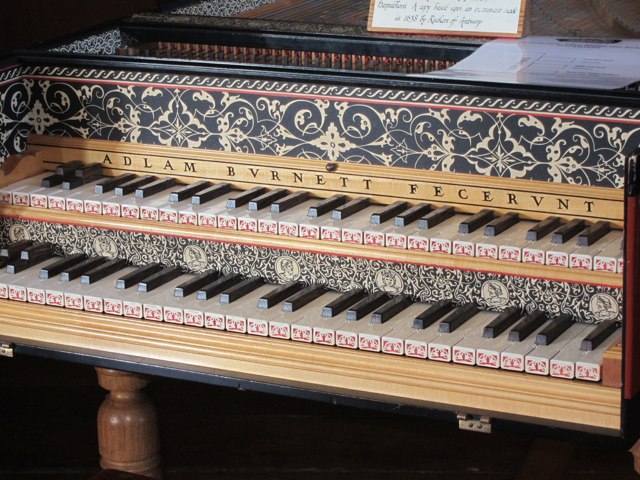
Musical Keyboard Inquiry

In addition to being a PYP Grade 6 teacher, I also teach music to Grades 4-6, in addition to my own homeroom. Last year, I taught music to Grades 1-6, but as the school is grows, the schedule gets a bit tighter.

The fourth graders are just beginning their musical keyboard study, so I thought we could set the stage with a listening-based inquiry.

In the activity, we listened to recordings of various keyboard instruments from hurdy-gurdy to minimoog for which I had gathered YouTube links. After each listen, students responded to the question:

How do you think it produces sound?


photo cc Finchcocks Musical Museum

03 September 2013

Back-to-School Marshmallow Spaghetti Tower Challenge!


I was first introduced to this activity during the MIT Media Lab Learning Creative Learning course. There are a few variations, such as limiting the amount of resources or including tape, but for my students' first day of sixth grade, I let chaos reign.

I gave each group a package of dry spaghetti, three small bags of marshmallows, and the simplest rules I could think of:

1 Build the tallest structure you can.
2 You may only use the materials I gave you.
3 We'll measure after 60 minutes.

01 September 2013

Five innovations for the first day of school

Although I was at school last week, tomorrow is the first day for students and I'm very excited. I've changed a few of my approaches to teaching and can't to get started. I think other teachers may be interested, so I'll outline a few of this year's innovations:

1 Organizing resources with Evernote. As I've been reporting in my 'Inquiry with Evernote' posts at Inquire Within, I have a few hundred photos, articles, videos, websites, etc tagged according to theme, concepts, and disciplines. The result is a cache of resources that can be called upon in various ways and is meant to provide provocation and support for inquiry-based learning and teaching.

2 Using the class blog as a learning hub. This year, our blog will be central to learning, connecting, and collaborating. With that in mind, I've already prepared posts in draft form ready to be published when the time comes. For example, in our first unit, we'll view two videos and read a magazine article. We'll discuss them in class, but respond on the class blog. I've embedded the videos and link to the article in posts so that they can be reviewed before students respond by writing comments.

We'll be inviting other classes inquiring into similar themes or topics to respond, as well, by searching their blogs for related posts on which to comment and using twitter to raise awareness.


25 August 2013

Summer PD Reflection - DES!GN

My summer professional development challenge for myself was to expand my understanding of design, including graphic, physical, instructional, etc. It was my Independent Inquiry for the last several weeks and I'm happy to share my findings.

The first thing that happened to me was the Making Learning Connected MOOC. The values I learned during that collaboration of Equity, Social Connection, and Full Participation, create an excellent frame for designing learning activities and opportunities for my students. By ensuring that these values are represented in my classroom at all times, I'm confident that engagement will be enhanced.

Please view my Laziness Map and other posts for the collaboration. The spirit of the Making Learning Connected MOOC will continue to thrive in the Educator Innovator Network and I look forward to following and participating in that endeavor.

Another exploration I made was of the remarkable depth of design resources available on tumblr and Pinterest. In addition to being entertaining, these social networks are teeming with artists, designers, brilliant teachers, and other interesting people who are happy to share their excellent work and resources. I still consider myself a beginner 'pinner', but I have enjoyed discovering and following new boards, although I must admit that I've been mostly attracted to the food... Much of design sense, as with any aesthetic appreciation, comes from viewing and experiencing many examples and constructing one's own understanding and social networks provide a rich selection.

There was also this timely post, which I have yet to fully explore.

My wife, Yuka, was an invaluable teacher this summer. We had many discussions about color, layout, font selection, and many other topics related to the visual appeal and usability of my instructional tools. As I continue to prepare presentations and materials, it's exciting to apply the her tutorials about using Adobe Creative Suite.

Finally, she discovered and shared with me the Design Thinking for Educators Toolkit, which I immediately downloaded and began reading. Many of the principles remind me of my own notion of metateaching, but from an informed and more highly developed perspective. It's exactly what I can use to realign many of my own ideas with developed theories and concepts of design.


18 August 2013

Inquiry with Evernote vol 2

After spending the summer curating and tagging a veritable plethora of resources for inquiry (300+ notes) and with the first day of a new school year rapidly approaching, it's time to use Evernote to plan a unit of inquiry for my grade 6 class. The inquiry was framed at the end of the last school year using the IB PYP planner:

Transdisciplinary Theme: Who we are

Central Idea: Human rights and responsibilities are shared across cultures.

Key Concepts: Function, Connection, Responsibility

Lines of Inquiry: How rights are viewed globally; How rights are granted; Actions required to protect rights

Naturally, I have a few resources and activities in mind already, such as introducing the Universal Declaration of Human Rights, surveying other classes around the world about their views regarding human rights, and researching the history of rights movements and laws, among others.

What I'm looking for from my Evernote notebook, however, is the shocking, thrilling, engaging, provoking media that truly engage authentic inquiry and learning.

The obvious thing to do first is to find out if the tagging scheme outlined in Inquiry with Evernote vol 1 really works to retrieve relevant and provocative resources. Starting with the 'Who we are' tag, my first search yielded 95 results. Refining that search by the 'Function' tag revealed 26 notes, 'Connection' had 23, and 'Responsibility' had 26 (to view notes including multiple tags, simply command-click).

Included in 'Who we are' plus 'Function' were many photos of people wearing traditional clothing which could be relevant to an inquiry into people's rights regarding their beliefs. Also, there was a link to a great infographic called How humans learn which will be very useful when discussing our right to education.

Among notes tagged 'Who we are' plus 'Connection', I found several resources about Digital Citizenship and cyberbullying which will prove to be very useful when we begin exploring our class blog and social media.

Finally, notes with both the 'Who we are' and 'Responsibility' tags led to a delightful collection of quotes by Albert Einstein that will be wonderful to explore early in the school year.

Just for fun, I tried 'Who we are' and all three key concepts and found 3 notes that met those criteria. Not bad! Of those three, this has the most potential:
bayaka
The note is simply called 'Bayaka' and comes from a post from one of my favorite tumblrs about the plight of the pygmy peoples of Central Africa. That post contains links to the original source Smithsonian article, a short video from the BBC, and a documentary film which raises issues of land rights and slavery.

What a find! Normally, I would spend hours trying to locate or relocate such rich and relevant media. However, the question remains whether these materials relate to the central idea and lines of inquiry into Rights. A scan of the Smithsonian article reveals this:

'Over the past decade, I've visited Pygmy clans in several Congo Basin countries, witnessing the destruction of their traditional lifestyle by the Bantu, as taller Africans are widely known. On this trip, this past February, my companion is Manfred Mesumbe, a Cameroonian anthropologist and expert on Pygmy culture. "The Bantu governments have forced them to stop living in the rain forests, their culture's bedrock," he tells me. "Within a generation many of their unique traditional ways will be gone forever."' Paul Raffaele, Smithsonian magazine, Dec 2008

It's like magic. If this article and related videos are not a perfect provocation for this inquiry, I don't know what would be. So what shall we do with them?

This unit will also serve as our introduction to Global Digital Citizenship, so I'll embed one of the videos on our class blog and let this be one of our first 'view and respond' activities to practice posting thoughtful comments. To support that task, we'll read the Smithsonian article together in class. Then, I'll challenge the students to research another instance of rights violations in the world, post their own findings, and comment on each other's posts.

What if a student needs help with their independent inquiry? Based on the nature of the assignment, I think Responsibility is the most applicable key concept. A quick browsing of the 26 matching posts turns up several that could help someone get started:
evernotesearch
The highlighted note with the photo of the crying woman is titled 'Ixil Mayans' and links to another tumblr post about oppressed indigenous people in Guatemala. It would provide ideal search terms to begin researching and images to effectively provoke the inquiry.

Questions being central to inquiry, I'd like to test my Evernote notebook's response to a more specific search. Let's see how it holds up to a question like "what are the differences between rights in different countries?". The logical terms to search would be 'rights' and 'country'. Unfortunately, I haven't tagged any posts with 'rights'. To make the matter worse, almost all of my notes tagged with names of countries are interesting photos, but not necessarily related to any article about current or historical events. Clearly, I need to improve my cache of secondary concepts (rights, transportation, technology, etc) and simply keep clipping notes focusing on issues and linked to more articles about historical and current events.

Finally, it's important to add a new tag to any notes used for this inquiry. I use the school year, grade, 'UOI#', and title of the the unit, in this case, Rights & Responsibilities. Notes used in this inquiry are tagged 1314 G6 UOI1 Rights & Responsibilities to make them easy to spot later, and so that tags will be organized chronologically.

Does Evernote work for inquiry?

I'd say so. In the time it took to write this post, I planned a sizable chunk of guided inquiry for my class including authentic articles and video, and that's from just one note. Further independent inquiry can be instantly supported with additional resources, as well as spontaneous modeled and guided inquiry.

In volume 3 of Inquiry with Evernote, I'll be reflecting on using Evernote in the classroom for real-time inquiry during the first weeks of a new school year. Thanks for reading and please leave your questions and suggestions!

02 August 2013

Connected Learning or just learning?

Make Cycle 6 (envisioning)

I was a rather curious child and a natural inquirer. A particular interest in cars led me to subscribe to magazines like Road & Track and Automobile, talk to knowledgeable people about how cars work, and even invest in a wonderful book called Auto Math Handbook. It provided the engineering foundation for many car designs which I diligently drew while summarily ignoring the television.
I'm pretty sure one of my designs inspired the creation of the Bugatti Veyron.